“There is nothing under your position that prevents Microsoft from storing United States communications, every one of them, either in Canada or Mexico or anywhere else, and then telling their customers, ‘Don’t worry. If the government wants to get access to your communications, they won’t be able to,'” Roberts said.
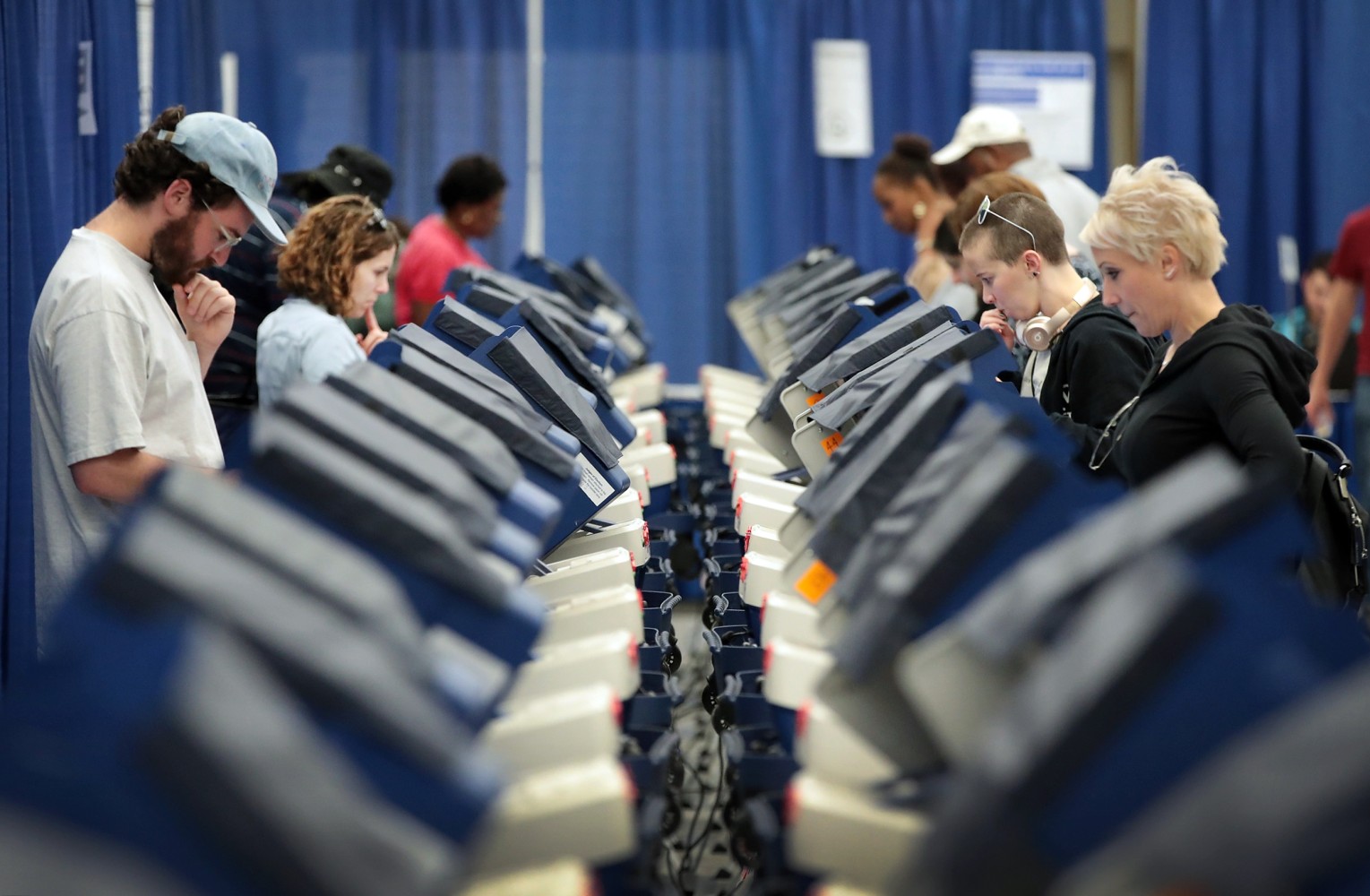
The U.S. intelligence community developed substantial evidence that state websites or voter registration systems in seven states were compromised by Russian-backed covert operatives prior to the 2016 election — but never told the states involved, according to multiple U.S. officials.
Top-secret intelligence requested by President Barack Obama in his last weeks in office identified seven states where analysts — synthesizing months of work — had reason to believe Russian operatives had compromised state websites or databases.
Three senior intelligence officials told NBC News that the intelligence community believed the states as of January 2017 were Alaska, Arizona, California, Florida, Illinois, Texas and Wisconsin.
The officials say systems in the seven states were compromised in a variety of ways, with some breaches more serious than others, from entry into state websites to penetration of actual voter registration databases.
While officials in Washington informed several of those states in the run-up to the election that foreign entities were probing their systems, none were told the Russian government was behind it, state officials told NBC News.
All state and federal officials who spoke to NBC News agree that no votes were changed and no voters were taken off the rolls.
According to classified intelligence documents, the intelligence community defines compromised as actual “entry” into election websites, voter registration systems and voter look-up systems.
NBC News reached out to all seven states that were compromised, as well as 14 additional states the Department of Homeland Security says were probed during the 2016 election.
To this day, six of the seven states deny they were breached, based on their own cyber investigations. It’s a discrepancy that underscores how unprepared some experts think America is for the next wave of Russian interference that intelligence officials say is coming.
Eight months after the assessment, in September 2017, the Trump administration’s Department of Homeland Security (DHS) finally contacted election officials in all 50 states to tell them whether or not their systems had been targeted. It told 21 states they had been targeted, and U.S. officials acknowledged that some of those attempts had been successful.
“I think the Obama administration should have been doing much more to push back against the Russians across the board,” said Juan Zarate, an NBC News analyst who was deputy national security adviser for combating terrorism under President George W. Bush. “I think the U.S. was very meek and mild in how we responded to Russian aggression.”
Denis McDonough, who was Obama’s last chief of staff, strongly disagrees, arguing the administration acted to thwart the Russians before and after the election. Obama administration spokespeople also say they transmitted sensitive intelligence regarding state compromises to congressional leaders.
“The administration took a series of steps to push back against the Russians to include far-ranging sanctions, diplomatic steps to push people associated with the Russian effort out of this country and also warning our friends and allies,” he said.
The Trump DHS, like under the Obama administration, has declined to share the intelligence assessment of which states were actually compromised, according to state election officials.
This month, in an exclusive interview with NBC News, Jeanette Manfra, the current head of cybersecurity at the Department of Homeland Security, said that “an exceptionally small number” of those 21 states “were actually successfully penetrated.” But Manfra declined to answer questions about the classified intelligence assessment, or to say specifically how many states had been penetrated.
Top election officials from all 50 states met in Washington this month for a National Association of Secretaries of State conference and received temporary security clearances for a classified threat briefing from intelligence officials. According to two officials present, one from the intelligence community and the other a state official, the actual intelligence on state compromises was not shared.
While numerous state election officials told NBC News that the Department of Homeland Security has been stepping up communications with them, many say they’re worried they are still not getting enough information from Washington.
Illinois itself had detected a “malicious cyberattack” on its voter registration system in the summer of 2016 and reported it to DHS, saying its voter rolls had been accessed but nothing had been altered. It is the only state to acknowledge actual compromise.
The other six states from the January 2017 assessment, however, say that when DHS told them last September that their systems had been targeted, it still did not tell them that their systems had been compromised. All six also say that based on their own cyber investigations, they believe their election systems were never compromised.
Three states said publicly in September that while some state websites were affected, none were directly related to voting; specifically, Texas, Wisconsin and California say some sites were “scanned.” But a former senior intelligence official told NBC News that these types of probes can also be serious, either as gateways to other networks or as reconnoitering for future attacks.
Fears of a repeat in 2018
Nearly 16 months after the presidential election, and more than eight months before the critical midterms, many state and federal officials are convinced the Russians will be back. They’re concerned that 2016 was laying the groundwork for a possible future attack.
“We have an extreme sense of urgency on insuring security of the 2018 elections, because you don’t get a chance to do it over,” said Alex Padilla, California’s secretary of state, who said there was no evidence of a successful hack in California.
Several state election officials, including Padilla, told NBC News they think they should have been told that U.S. intelligence agencies believed they’d been breached whether or not that turned out to be true.
“It is hugely imperative that intelligence be shared with state elections officials immediately in order to protect our election infrastructure and the integrity of election results,” Padilla said.
Reluctance to share the information may be due, in part, to the classification of the intelligence itself. Multiple intelligence officials told NBC News that determining the Russian government was behind the hacks depended on “exceptionally sensitive sources and methods” including human spies and eavesdropping on Russian communications.
No state election official at the time had a security clearance sufficient to permit access to such sensitive information, according to DHS.
“Look, whether or not state elections officials had the proper clearance has unfortunately been an excuse in my opinion, a bureaucratic response for why information or intelligence hasn’t been more quickly shared with state elections officials,” Padilla said.
“We’ve got to fix that right away, because it does us no good, [when somebody is] sitting in Washington, D.C., with a bit of information about a significant cyberthreat and elections officials and locals are completely unaware. That doesn’t help anybody and that needs to be addressed,” Padilla said.
Zarate said that he thought “too much of this has happened behind the veil of the government,” and that “much more has to be discussed openly with the public about what we know of the kinds of attacks that are happening, who may be behind them, and how we defend ourselves against [them].”
A spokesperson for Florida’s secretary of state, Mark Ard, said the state was informed by DHS in September 2017 that Florida had been targeted by hackers in 2016. “This attempt was not in any way successful and Florida’s online elections databases and voting systems remained secure,” Ard said.
Texas Secretary of State Rolando Pablos said in a statement that his agency had not seen any evidence that any voting or voting registration systems in Texas were compromised before the 2016 elections.
The public information officer for the Wisconsin Elections Commission said the commission has never detected a successful hack on its system, “nor has it ever been notified of one by the Department of Homeland Security or any other state or federal agency.”
A spokesperson for the Arizona secretary of state, Matt Roberts, said the state had still not been informed of a successful hack, and had seen no evidence of one. Roberts said the state had not been told that “ANY Arizona voting system has been compromised, nor do we have any reason to believe any votes were manipulated or changed. No evidence, no report, no nothing.”
Alaska did not respond to repeated requests for comment, but has previously denied that any breach occurred.
Bradley Moss, a lawyer specializing in national security, tried to lift the veil and find out what U.S. intelligence knew about the Russian attempts to compromise the voter system. He sued for disclosure of government files and won last week, receiving 118 top-secret pages from the intelligence community. The pages referred to “compromises” and other breaches but the pages were almost completely blacked out for security reasons.
Said Moss: “The spreadsheets show that there were documented breaches of election networks. That there were documented, numerous documented instances of attempted breaches of state election networks, and that there was a widespread concern among several agencies in the intelligence committee about the sanctity and the integrity of these election networks.”
In a statement, the Department of Homeland Security said it has been working with state and local officials for more than a year on the issue.
“This relationship is built on trust and transparency, and we have prioritized sharing threat and mitigation information with election officials in a timely manner to help them protect their systems,” DHS acting press secretary Tyler Houlton said.
“In addition to granting state officials clearances to give them access to classified information, we work to declassify information rapidly and have the ability to grant one-day waivers when necessary to provide state officials with information they may need to protect their systems.
“We are committed to this work and will continue to stand by our partners to protect our nation’s election infrastructure and ensure that all Americans can have the confidence that their vote counts — and is counted correctly.”
A statement from the Office of the Director of National Intelligence said only: “The declassified Intelligence Community Assessment of January 6, 2017, found that Russian actors did not compromise vote tallying systems. That assessment has not changed.”
Next steps
At a Senate hearing on Tuesday, the National Security Agency director, Adm. Mike Rogers, acknowledged that the White House has not directed him to try to stop Moscow from meddling in U.S. elections.
Sen. Claire McCaskill, D-Mo., said that was “outrageous” and asked whether the U.S. was in a position to stop Russia from “doing this again.”
“We’re taking steps but we’re probably not doing enough,” Rogers said.
“I want to know, why the hell not?” McCaskill shot back. “What’s it going to take?”
While the FBI and the Department of Homeland Security say they are taking steps to shore up cyberdefenses, FBI Director Christopher Wray told Congress this month that the instructions did not come from the top.
When Sen. Jack Reed, D-R.I., asked Wray if the president had directed him or the bureau to take “specific actions to confront and blunt” ongoing Russian activities, Wray said, “We’re taking a lot of specific efforts to blunt Russian efforts.”
Reed then asked, “Specifically directed by the president?” Wray answered, “Not as specifically directed by the president.”
The White House on Tuesday pushed back on any suggestion they’re not doing enough, saying President Trump is “looking at a number of different ways of making sure that Russia doesn’t meddle in our elections.”
For the future, Zarate suggests taking a lesson from the past.
“After 9/11, the walls between law enforcement and intelligence sources had to be broken down in order to connect the dots,” Zarate said. “There has to be a whole-of-government and whole-of-nation approach to dealing with what is an assault on American democracy.”
Federal officials confirmed that they launched a big immigration enforcement action this week in Northern California.
Federal officials confirmed that they launched a big immigration enforcement action this week in Northern California.
Photo: LM Otero/AP
FILE – In this Thursday, Jan. 18, 2018, file photo, Diana Colin, right, with the Coalition for Humane Immigrant Rights shouts as the group from California protests outside the office of House Majority Leader Kevin McCarthy, of California, on Capitol Hill in Washington, in favor of the Deferred Action for Childhood Arrivals (DACA) program. On Monday, Feb. 26, 2018, a federal judge issued a sweeping ban on the U.S. government revoking deportation protection of immigrants brought to the United States illegally as children. less
Photo: Jacquelyn Martin, AP
Federal officials said Tuesday they arrested more than 150 undocumented immigrants in a Northern California sweep aimed at countering local sanctuary laws, while suggesting Oakland Mayor Libby Schaaf’s decision to alert the public to the secret operation may have allowed some targets to elude capture.
Since Sunday, U.S. Immigration and Customs Enforcement officers have fanned out from the Central Valley to the far northern reaches of the state, knocking on doors, detaining people and prompting alarm from community activists and some Democratic politicians who oppose President Trump’s immigration crackdown.
Agency officials, who had remained silent about the operation for three days, said in a written statement that they arrested people in cities including San Francisco, Bay Point, Sacramento and Stockton, and that half of those arrested had criminal convictions, including for violent crimes.
The operation was named Keep Safe. Officials did not say whether the first letters of the operation were intended as a reference to Kate Steinle, the San Francisco woman shot dead on a bay pier in July 2015 by a homeless undocumented immigrant. ICE also did not say whether the sweep was over.
“Sanctuary jurisdictions like San Francisco and Oakland shield dangerous criminal aliens from federal law enforcement at the expense of public safety,” said Thomas Homan, the acting director of ICE. “Because these jurisdictions prevent ICE from arresting criminal aliens in the secure confines of a jail, they also force ICE officers to make more arrests out in the community, which poses increased risks for law enforcement and the public.”
Mayor Schaaf said she had multiple sources confirming that Immigrations and Customs Enforcement (ICE) agents are planning to conduct raids this week. (Feb. 25)
Media: Associated Press
Homan slammed Schaaf, who on Saturday night released an unprecedented warning that ICE was about to begin arresting people. Schaaf said she issued the alert after receiving confidential tips from “credible sources,” and conferring with attorneys to make sure she wasn’t opening herself up to federal prosecution.
The mayor’s move endangered ICE officers and alerted their targets, Homan asserted, “making clear that this reckless decision was based on her political agenda.” He said 864 “criminal aliens and public safety threats remain at large in the community, and I have to believe that some of them were able to elude us thanks to the mayor’s irresponsible decision.”
Fox News, which was given a ride-along with ICE officers during the operation, reported that agency officials were asking the Department of Justice to investigate whether Schaaf broke any laws.
In a statement Tuesday night, Schaaf stood by her decision to go public.
“My statement on Saturday was meant to give all residents time to learn their rights and know their legal options. It was my intention that one mother, or one father, would use the information to help keep their family together,” the mayor said. “I do not regret sharing this information. It is Oakland’s legal right to be a sanctuary city and we have not broken any laws. We believe our community is safer when families stay together.”
San Francisco Mayor Mark Farrell released a statement saying that the city won’t “cower” as the “administration pursues their political plan of haphazardly punishing sanctuary cities.”
“We stand with our hardworking, law-abiding immigrant neighbors and we are unified in our response to the divisive rhetoric of this president.”
The Chronicle reported in January that federal officials were planning the Northern California operation. The Trump administration has repeatedly expressed frustration at sanctuary laws in the state, which restrict cooperation between local authorities and ICE in an effort to convince undocumented immigrants they don’t need to live in the shadows.
Trump seized upon the killing of Steinle to argue that sanctuary policies are dangerous. The undocumented immigrant shooter, Jose Ines Garcia Zarate, had previously been released from San Francisco County Jail under the city’s sanctuary ordinance, even though immigration officers had asked that he be turned over for a sixth deportation.
This week’s sweep is the second to target California since a statewide sanctuary law signed by Gov. Jerry Brown, SB54, went into effect in January. The legislation, among other things, limits the circumstances in which jails across the state can turn over undocumented inmates to ICE and forbids police from arresting people on immigration warrants.
Earlier this month, ICE arrested more than 200 immigrants suspected of being undocumented in an operation in Los Angeles. Federal agents also told 122 businesses there that they would be checking whether their employees were authorized to work. ICE launched a similar action in Northern California in January, visiting 77 businesses.
“If you take all of the administration’s statements in context … it suggests that this is highly politically motivated and meant to send a message to California,” said Pratheepan Gulasekaram, a professor and immigration expert at Santa Clara University School of Law. The message, he said, is that “not cooperating with federal immigration authorities will result in aggressive immigration enforcement.”
The ACLU of Northern California said Tuesday that reports from rapid-response networks over the previous three days suggested “that ICE enforcement is terrorizing communities of color. The targeting of cities and states that refuse to use their limited resources to fuel the Trump administration’s deportation machine is cruel and inhumane.”
ICE said the agency “focuses its enforcement resources on individuals who pose a threat to national security, public safety, and border security.” But officials also said ICE “no longer exempts classes or categories of removable aliens from potential enforcement.”
Among those arrested this week, ICE said in a statement, was a 38-year-old “documented Sureño gang member” with four previous deportations to Mexico and multiple criminal convictions, including for assault with a deadly weapon.
In Bay Point, officials said, officers arrested a man with eight past deportations and a conviction for assault with a deadly weapon, and in Stockton they arrested a man with a conviction for committing lewd acts on a child. ICE did not release a full list of those arrested.
The Northern California sweep began three days after Trump threatened to remove ICE officers from the state, saying, “In two months they’d be begging for us to come back.”
WASHINGTON—North Korea shipped 50 tons of supplies to Syria for use in building what is suspected to be an industrial-scale chemical weapons factory, according to intelligence information cited in a confidential United Nations report.
A Chinese trading firm working on behalf of Pyongyang made five shipments in late 2016 and early 2017 of high-heat, acid-resistant tiles, stainless-steel pipes and valves to Damascus, the report said, citing them as evidence that Syrian President Bashar al-Assad is paying North Korea to help…
Sarah Huckabee Sanders, the White House press secretary, said the Department of Homeland Security was working with state and local elections officials to prevent attacks on electoral systems, which were wider than initially thought during the 2016 vote. She also cited a program to provide $40 million to counter Russian and Chinese propaganda, though she failed to mention that the money was delivered to the State Department only after months of delays and withering criticism from Republicans in Congress.
As for Admiral Rogers, “nobody is denying him the authority,” Ms. Sanders said before blaming the Obama administration, noting that the Russian campaign began on its watch.
Newsletter Sign Up
Continue reading the main story
Thank you for subscribing.
An error has occurred. Please try again later.
You are already subscribed to this email.
View all New York Times newsletters.
See Sample
Manage Email Preferences
Not you?
Privacy Policy
Opt out or contact us anytime
Asked during the earlier hearing whether he had the authority and the ability to disrupt the Russian attacks “where they originate,” Admiral Rogers replied, “I don’t have the day-to-day authority to do that.”
“So you would need, basically, to be directed by the president,” said Senator Jack Reed of Rhode Island, the top Democrat on the Armed Services Committee.
“Have you been directed to do so?” Mr. Reed added.
“No, I have not,” Admiral Rogers said.
But, Admiral Rogers insisted, he is using the authorities already at his disposal “to begin some specific work.” He would not give details in the open hearing because the work was classified, he said.
Exactly what capabilities the United States has to deter Russian meddling are highly classified and shrouded by layers of secrecy. But the N.S.A. is known to have developed dangerous cyberweapons. A number have leaked out in the past few years, providing hackers with the tools they needed to infect millions of computers around the world, crippling hospitals, factories and businesses.
But Mr. Rogers said on Tuesday that “it’s probably fair to say that we have not opted to engage in some of the same behaviors that we are seeing, if I could just keep it at that.”
Among many teachers, there’s a sense that they have little to lose. Paige Muendel, a seventh-grade special education teacher from Morgantown, said her take-home pay has decreased due to rising health care costs. She lives close to the border of Pennsylvania, a state where the average teacher salary is $20,000 higher. So far, she’s resisted looking for a job there, but she doesn’t know how long she could hold out under the status quo.
The court’s decision not to hear the appeal could also relieve the immediate political pressure on lawmakers to permanently address the status of those immigrants, or to deal with the additional one million Dreamers who had never signed up for the DACA program. They remain at risk of deportation if immigration agents find them.
Even as he ended the DACA program, Mr. Trump had called upon Congress to give the young immigrants legal status — and an eventual path to citizenship — before the program was scheduled to expire March 5.
But that proposal has been bogged down in partisan gridlock as members of Congress argue about broader changes to the United States’ immigration system that the president and his conservative allies in Congress have demanded as part of any deal to address the future of the young immigrants.
This month, senators failed to reach consensus in a series of votes on bills to address the Dreamers and other immigration issues. A bipartisan coalition in the Senate roundly rejected a measure backed by Mr. Trump that would have all but ended the family-based migration system that has been in place for decades. A separate bipartisan measure that would have legalized the Dreamers and allocated $25 billion for a wall on the border with Mexico fell six votes short of the 60 needed to proceed to a final vote.
Now, the court’s action is likely to lessen the urgency on Capitol Hill over the issue, making it even more probable that Congress will take no action as the legal process plays out.
As a possible fallback plan after the Senate’s failure this month, lawmakers could negotiate a short-term patch that would continue the DACA program for a few years, perhaps in exchange for partial funding of Mr. Trump’s wall. Such a deal could be tucked into a broad spending bill that lawmakers must approve by March 23, when government funding is set to expire.
But the court’s move could undercut any momentum to push for even a very narrow deal in the next few weeks, and there has been little evidence of progress toward any kind of bipartisan pact that would be acceptable to Mr. Trump. House Republican leaders still appear focused on a hard-line conservative immigration bill that would be a nonstarter in the Senate.
Advertisement
Continue reading the main story
“While the court’s decision appears to have pushed this deadline beyond March, House Republicans are actively working toward a solution,” said AshLee Strong, a spokeswoman for Speaker Paul D. Ryan of Wisconsin.
Mr. Trump has repeatedly condemned Democrats in recent days, accusing them of not caring about the young immigrants. In one recent Twitter post, he said Republicans “stand ready to make a deal” to protect the Dreamers from deportation.
Dems are no longer talking DACA! “Out of sight, out of mind,” they say. DACA beneficiaries should not be happy. Nancy Pelosi truly doesn’t care about them. Republicans stand ready to make a deal!
But Democrats, and some Republicans, accuse Mr. Trump and his hard-line conservative White House advisers of using the Dreamers as leverage for changes to the immigration system that conservative, anti-immigrant activists have long sought.
The case at the Supreme Court was brought in California by five sets of plaintiffs. They included four states — California, Maine, Maryland and Minnesota — and Janet Napolitano, the president of the University of California. As secretary of homeland security in the Obama administration, Ms. Napolitano signed the document that established the program in 2012.
The judges acknowledged that presidents have broad powers to alter the policies of earlier administrations. But they said the Trump administration’s justifications for rescinding the program did not withstand scrutiny.
The administration had argued that the program was an unconstitutional exercise of authority by the executive branch, relying on a ruling from the United States Court of Appeals for the Fifth Circuit, in New Orleans, concerning a related program. The Supreme Court deadlocked, 4 to 4, in an appeal of that ruling.
The judges said the two programs differed in important ways, undermining the administration’s legal analysis. They noted, too, that Mr. Trump had issued conflicting statements about the DACA program.
Both judges issued nationwide injunctions ordering the administration to retain major elements of the program while the cases moved forward. Such nationwide injunctions from judges in individual cases, which have been used to block executive actions in both the Obama and Trump administrations, have been the subject of much commentary and criticism.
Advertisement
Continue reading the main story
The administration appealed Judge Alsup’s ruling to the United States Court of Appeals for the Ninth Circuit, in San Francisco, and that court put the appeal on a fast track. In an unusual move, the administration also asked the Supreme Court to grant immediate review, leapfrogging the appeals court.
That procedure, called “certiorari before judgment,” is used rarely, typically in cases involving national crises like President Harry S. Truman’s seizure of the steel industry and President Richard M. Nixon’s refusal to turn over tape recordings to a special prosecutor.
In a statement, the Justice Department said it would continue to make its legal arguments as the case proceeded.
“While we were hopeful for a different outcome, the Supreme Court very rarely grants certiorari before judgment, though in our view, it was warranted for the extraordinary injunction requiring the Department of Homeland Security to maintain DACA,” said Devin M. O’Malley, a spokesman for the department. “We will continue to defend D.H.S.’s lawful authority to wind down DACA in an orderly manner.”
Lawyers for the challengers expressed satisfaction with Monday’s developments.
“We are pleased that the Supreme Court is allowing the normal appellate process to run its course,” said Theodore J. Boutrous Jr., who represents people affected by the program. “DACA is a lawful and important program that protects young people who came to this country as children and who know this country as their only home.”
In a brief urging the Supreme Court to deny review, lawyers for the University of California wrote that “it has been nearly 30 years since the court granted certiorari before judgment without the benefit of a court of appeals ruling on the question presented.”
In a second brief, lawyers for the four states wrote that no national emergency warranted use of the unusual procedure.
Advertisement
Continue reading the main story
“Since 2012, the DACA program has allowed hundreds of thousands of young people to receive deferred action, work authorization and other benefits,” they wrote. “The district court’s preliminary injunction only partially and temporarily restores the situation that existed prior to petitioners’ abrupt decision to terminate the program — and only for individuals who had already received deferred action under DACA.”
“Petitioners are entitled to a prompt appeal,” the brief said, “but there is no imminent deadline posing a critical threat to the public interest of the sort that might justify bypassing the normal channels for that review.”
In the administration’s brief, Solicitor General Noel J. Francisco told the justices that “an ongoing violation of federal law being committed by nearly 700,000 aliens” required the Supreme Court to act. But he did not ask the court to stay Judge Alsup’s injunction while the case moved forward. Mr. Francisco wrote that an immediate stay would interfere with the administration’s goal of an “orderly wind-down” of the program.
Many are hoping Congress will finally move on stalled gun control legislation in the wake of the latest deadly school shooting, but the effort on Capitol Hill still faces the same kinds of hurdles that have made it impossible for decades to pass measures that make significant changes to current gun laws.
The Senate could act soon on a bill that would improve the nation’s background check system used for scrutinizing most firearms purchases, including incentives and penalties to make state government report information that could be used to block gun purchases.
But the Republican-run House is likely to oppose the measure unless it is coupled with language allowing concealed carry permit holders to legally bring their weapons to other states, which is a measure that cannot pass the Senate. The two measures were paired in legislation the House passed in December.
“It should not happen where that bill comes up by itself in the House,” Rep. Jim Jordan, R-Ohio, said, referring to the Senate bill to improve the background check system.
Jordan said most members of his faction of conservative lawmakers, the House Freedom Caucus, would oppose the standalone background check bill. GOP leaders assured them in December the two measures “would stay together.”
Opposition to a bill that leaves out reciprocity language, Jordan said, “is broader than the Freedom Caucus.”
The biggest wildcard in this equation is President Trump, who has taken a leading role on gun control and wants to pass something. Trump held a listening session with the survivors of the Broward County school shooting that left 17 people dead this month.
He’s called for legislative action, and has even tweeted out some ideas, such as raising the purchasing age to 21 for rifles. Trump could prove to be influential if a bill gets stuck in the House or Senate.
“Congress is in a mood to finally do something on this issue — I hope!” Trump tweeted last week. In the same tweet, Trump pushed for Congress to act on the Senate background check bill.
But even with Trump cheering the process on, it’s not yet clear if the Senate will be able to pass its own version.
On the surface, it should be easy in the Senate. The bill was introduced by Senate Majority Whip John Cornyn, R-Texas, and Sen. Chris Murphy, D-Conn., and is backed by more than a dozen senators from both parties, including Majority Leader Mitch McConnell, R-Ky., and Minority Leader Chuck Schumer, D-N.Y.
The bill would nudge federal and state agencies to report all relevant information to the National Instant Criminal Background Check System, or NICS. The Fix NICS Act would provide grant incentives and penalties to improve federal and state reporting of criminal and relevant mental health history records. Two recent mass shootings may have been prevented if the system had been working.
Cornyn has the power of the Republican leadership to help steer the bill to the Senate floor, and Murphy is considered a Democratic leader on gun control matters. Murphy also told the Washington Examiner he believes he can rally his own party lawmakers behind the measure to help ensure passage, without Democrats insisting on significantly expanding the scope of background checks, which is a non-starter with Republicans.
Despite these advantages, the Fix NICS bill has languished in the Senate since it was introduced on Nov. 16.
The National Rifle Association’s opposition doesn’t appear to be the problem. The NRA backs the House bill, which pairs background checks with expanded concealed carry authority, but it is not opposed to the Cornyn-Murphy standalone version that deals only with background checks, an NRA spokeswoman told the Washington Examiner.
But another major gun rights organization, Gun Owners of America, said it won’t back the bill without the reciprocity language, and its membership has been calling and emailing the White House and lawmakers to register their opposition, stalling the measure.
The GOA, which claims 1.5 million grassroots supporters, believes the NICS list lacks due process and ends up including many people who don’t belong in the system, which could deprive them of a constitutional right to own a gun. Legislative counsel Michael Hammond told the Washington Examiner that his group sees the bill as a bribe to states to turn more names over to the NICS database, and said the group will fight hard to stop it.
He also warned of political ramifications for Republicans if it becomes law.
“Our people are going up the wall about this bill,” Hammond said. “They understand what the ramifications are. If the Republicans become the ones who deliver gun control, following eight years of failure of the Barack Obama administration, our people are not going to turn out for them in November.”
The standalone Fix NICS legislation is now parked in the Senate Judiciary Committee, run by Sen. Chuck Grassley, R-Iowa. Outside organizations that back the measure say they believe it could be considered soon in the Senate, but the bill is not scheduled for votes in the Judiciary Committee.
Judiciary held a hearing in December on the NICS reporting problems and the Cornyn-Murphy legislation.
“Our office is in discussions about the best path forward for this issue, but we likely won’t have any update until after senators return to Washington,” Judiciary Committee spokesman Taylor Foy told the Washington Examiner last week, when Congress was out for the President’s Day recess.
“Grassley is also working with several other colleagues on legislation to improve school safety, and we will provide further updates on that effort as it develops.”
Foy added that Grassley last week began probing the FBI’s response to warnings it received about the Broward County school shooter.
“We expect to receive a briefing from the FBI this week,” Foy said.
Conservatives on the Judiciary Committee panel told the Washington Examiner they are working on adding provisions to the legislation that would address due process problems that gun rights activists say plague the NICS system.
This week’s Senate schedule, meanwhile, is dedicated to clearing Trump’s judicial and Cabinet nominees, and there’s no sign of a pending gun debate on the floor.
But the issue has moved quickly in the days after the Florida shooting, and Trump has made his presence known. For that reason, some people think the dynamics could change once Congress returns to work.
Larry Keane, senior vice president of the National Shooting Sports Foundation, said the Cornyn-Murphy bill is gaining support and could end up on the floor for a vote soon thanks in part to Trump’s involvement.
“I do expect that, given the president’s apparent support for the legislation and the fact that it has broad, bipartisan support and the lead co-sponsors are Murphy and Cornyn, this legislation has the possibility to move rather quickly,” Keane said.
The foundation is based in Newtown, Conn., not far from Sandy Hook Elementary where a gunman stormed into the school in December 2012 and shot 20 young children and six adults. The foundation has been campaigning on behalf of the Fix NICS legislation since 2013.
“Any database is only as good as the information that gets put into it,” Keane said. “People are falling through the cracks that should not be able to purchase firearms.”
“So @Delta, you REALLY want 5 million #NRA members like me, who have NEVER committed a mass shooting, to fly on your competition? Done,” tweeted one member, Jessie Jane Duff, earning more than 4,000 retweets. “Who ever thought this was a great PR campaign idea should be fired.”