The Yemen conflict, which began in 2014, has killed thousands, devastated the water and public health systems, left 700,000 people infected with cholera and seven million at risk of famine.
Photo
A man carried a young girl who was rescued from the site of a Saudi-led airstrike that killed eight of her family members last month in Sana. Credit
Khaled Abdullah/Reuters
Human rights groups have documented a trail of international law violations on both sides of the conflict. The United Nations has repeatedly complained of a lack of access in the country, including for the delivery of lifesaving aid.
The latest United Nations human rights report, released in early September, found that Saudi-led coalition airstrikes continued to be the “leading cause” of civilian deaths, including child deaths.
The draft resolution, seen by The New York Times, encourages the Yemen national human rights body to cooperate with the United Nations human rights office and seeks to establish a three-member commission of inquiry. That panel, according to the draft, would “carry out comprehensive investigations into all alleged violations and abuses of human rights and violations of international law by all parties to the conflict in Yemen since September 2014.”
Newsletter Sign Up
Continue reading the main story
Thank you for subscribing.
An error has occurred. Please try again later.
You are already subscribed to this email.
View all New York Times newsletters.
See Sample
Manage Email Preferences
Not you?
Privacy Policy
Opt out or contact us anytime
It is sponsored by Belgium, Canada, Ireland, Luxembourg, and the Netherlands.
The Saudi ambassador to the United Nations, Abdallah Y. al-Mouallimi, called the draft resolution “premature.”
He said the United Nations should instead help Yemen’s national authorities carry out their own investigations. Saudi Arabia had circulated its own resolution proposing that approach and said it hoped “a reasonable outcome” would be reached.
Asked if the Saudis would retaliate economically against those countries pushing a commission of inquiry, the Saudi ambassador offered a nuanced response.
“We don’t link these issues with commercial considerations,” Mr. Mouallimi said, “but I think all the countries recognize we have presented a reasonable proposal and that trying to take alternative action would not be considered a friendly gesture.”
Ravina Shamdasani, a spokeswoman for The Office of the High Commissioner for Human Rights, said in an email that Yemen’s national commission lacked access to Houthi-controlled areas and “cannot do its work impartially,” noting that it received funds from Saudi Arabia.
For his part, Mr. Trump congratulated Mr. Moore in a tweet. “Luther Strange started way back ran a good race. Roy, WIN in Dec!” he wrote.
In a race that began as something of a political afterthought and ended up showcasing the right’s enduring divisions, the victory by Mr. Moore, one of the most tenacious figures in Alabama politics, will likely embolden other anti-establishment conservatives to challenge incumbent Republicans in next year’s midterm elections.
And more immediately, the party will be forced to wrestle with how to prop up an often-inflammatory candidate given to provocative remarks on same-sex marriage and race — all to protect a seat in a deep-red state. Mr. Moore’s incendiary rhetoric will also oblige others in the party to answer for his comments, perhaps for years to come, at a time when many Republicans would just as soon move on from the debate over gay rights.
On Dec. 12, Mr. Moore will face Doug Jones, a former federal prosecutor and the Democratic nominee, in a race that will test the party loyalties of center-right voters who may be uneasy about their nominee. It may also reveal just how reliably Republican the state has become in the quarter-century since a Democrat last won a Senate election here.
Mr. Jones said in a statement that Alabama needed a serious senator who would rise above partisanship and work with everyone in Congress. He criticized the debate among Republicans leading up to Tuesday’s election as lacking substance. “I will never embarrass the people of Alabama,” Mr. Jones said. “I am running so the people of Alabama can be proud of their next senator.”
Mr. Moore, 70, has proved himself to be a political survivor. He has been effectively removed from the State Supreme Court twice — the first in 2003, over his refusal to remove a statue of the Ten Commandments in the courthouse; the second last year, when he urged the state’s probate judges to defy federal orders regarding same-sex marriage.
And in recent days, both the president and Vice President Mike Pence had campaigned for Mr. Strange. Mr. Trump, an enormously popular figure in Alabama, cast aside the tradition of presidents treading carefully in contested primaries, as well as the warnings from his own advisers regarding a candidate trailing in the polls.
Photo
Mr. Strange spoke during a rally with President Trump on Friday in Huntsville, Ala. Credit
Tom Brenner/The New York Times
Yet instead of delivering a tightly crafted testimonial at a rally on Friday, the president rambled for nearly an hour and a half about a range of topics, while openly questioning whether he was making a mistake coming into the state for Mr. Strange, who oriented his entire run around Mr. Trump’s endorsement and stood looking on with a red Make America Great Again hat atop his head.
Advertisement
Continue reading the main story
Mr. Strange conceded defeat on Tuesday night before a subdued audience at a hotel outside of Birmingham, acknowledging in a moment of striking candor that he did not fully grasp the forces at play in his loss.
“We’re dealing with a political environment that I’ve never had any experience with,” Mr. Strange said. “The political seas, the political winds in this country right now are very hard to navigate. They’re very hard to understand.”
He thanked Mr. Trump effusively, praising the president as a “loyal friend” and attempting to absolve him of any blame for the result. “If this causes him any trouble,” Mr. Strange said, “it’s not his fault.”
Mr. Strange’s defeat was the first time an incumbent senator with active White House support has lost since 2010, when Arlen Specter, the longtime senator of Pennsylvania, was beaten in a Democratic primary after switching parties.
But his loss was not just a blow to Mr. Trump. Mr. Moore relentlessly linked the senator to Mr. McConnell, who has made a priority of protecting his caucus from intraparty challenges, but is an increasingly polarizing figure among grass-roots Republicans. Despite the money and staff he directed to the race, Mr. McConnell became as much a liability as he was an asset, leaving Republicans nervously wondering what that may portend in other primaries next year.
On Tuesday night, Mr. McConnell said in a statement that he understood Mr. Moore had channeled “a dissatisfaction with the progress made in Washington.” Saying that he shared that frustration, Mr. McConnell said he was determined to help Mr. Moore win, and made no references to the bitter attacks on his leadership by Mr. Moore and his allies.
Mr. McConnell and his allies were jolted with another reminder of their limited control earlier in the day, when Senator Bob Corker of Tennessee, a popular incumbent, announced he would not run for re-election. As the first senator to opt out of seeking another term in 2018, Mr. Corker opened the way for another rowdy Southern primary in which the national party’s influence may be sorely tested.
Advertisement
Continue reading the main story
Stephen K. Bannon, an ousted White House adviser and an enthusiastic backer of Mr. Moore, crowed about Mr. Corker’s retirement in brief remarks before the former judge took the stage here. Mr. Bannon predicted a populist “revolution” would follow the Alabama results.
Mr. Strange’s demise was in some respects as much a local phenomenon as a national one, stemming from his appointment this year by then-Gov. Robert Bentley to fill the seat vacated by Attorney General Jeff Sessions. Mr. Strange, the state’s attorney general at the time, was overseeing an investigation into Mr. Bentley’s personal relationship with a close aide, suggesting to many in a scandal-weary state that there may have been a corrupt bargain. The newly appointed senator denied any wrongdoing, but never fully confronted the issue in a way that would eliminate the lingering cloud over the appointment.
And by Monday, an adviser to Mr. McConnell, anticipating defeat, started to privately make the case that it was Mr. Bentley’s scandal and the circumstances around the appointment that was most to blame for Mr. Strange’s lackluster support.
When the Alabama race started, it was with less fanfare, merely a side effect of Mr. Trump’s selection of Mr. Sessions as attorney general.
Republicans typically win federal races in Alabama without difficulty, so there was little immediate concern about the fate of Mr. Sessions’s seat, and less still after the appointment of such a conventional politician as Mr. Strange.
Mr. Strange’s status as a proxy for the Republican establishment and a test of the president’s sway came about almost by accident — a consequence of factors having little to do with Mr. Strange himself.
Seeking to ward off insurgents like Mr. Moore and Representative Mo Brooks, who finished third in last month’s primary, Mr. McConnell forcefully backed Mr. Strange’s bid to have his appointment affirmed by voters.
The Senate Republican leader treated Mr. Strange as the political equal of his elected colleagues and ordered strategists in Washington not to work against him. Mr. McConnell and a host of other senators lobbied an initially reluctant Mr. Trump to get involved on Mr. Strange’s behalf over the objections of some advisers. The confusing crosscurrents of the party were on vivid display when the president campaigned for Mr. Strange on Friday.
Advertisement
Continue reading the main story
As staff members from the party’s campaign arm allied with Mr. McConnell looked on, Mr. Strange told the conservative audience that they should elect him so he could “stand up to” Mr. McConnell.
And then the president took the stage and assured attendees he would back Mr. Moore were Mr. Strange to lose, comments that were soon made into an online ad by an anti-establishment conservative group.
Predictably then, the race took on a life of its own, carrying outsize implications for the president and his perceived grip on the Republican Party.
Mr. Strange and his political allies bombarded Alabama voters with a message of total fealty to Mr. Trump, all but trying to put the president on the ballot. Mr. Trump lauded Mr. Strange as an indispensable man, at least when sticking to the staff-crafted script.
Mr. Strange made little attempt to find a new, more moderate universe of voters in the runoff who would recoil from the thought of Mr. Moore as their senator, a strategy fashioned next door in Mississippi when Senator Thad Cochran found himself in a runoff with a hard-line primary challenger in 2014. In fact, some strategists who had been with Mr. Cochran’s campaign said they did not hear from Mr. Strange’s advisers.
The perils of presidential involvement were obvious to some, and conservative allies of Mr. Trump, including Mr. Bannon had counseled him not to meddle in Alabama. To a certain faction of advisers, the race looked like a no-win proposition for the president, since Mr. Trump’s base overlaps so heavily with Mr. Moore’s.
But he was not the only prominent figure here to gamble on Mr. Strange. Senator Richard Shelby, a pillar of Alabama politics for over 45 years, dispensed with his usual caution to support a longtime friend. But he saw how the political winds were blowing well before Tuesday.
On a get-out-the-vote conference call with Mr. Strange’s supporters this month, he recounted an anecdote about the 1970 Democratic governor’s race here between Albert Brewer, a racial moderate, and the segregationist George C. Wallace, a divisive figure in his time. After it became clear that Mr. Wallace had won, the University of Alabama’s young, progressive president, F. David Mathews, mournfully turned to his family and said they would have to “get used to living with George Wallace.”
Now, Mr. Shelby said, they may have to get used to living with Mr. Moore in the Senate, where he could be just as divisive.
As a businessman, Donald Trump erected unauthorized flagpoles on his properties to embarrass local officials who were trying to uphold zoning ordinances. As a presidential candidate, he told the first football player who sat in protest during the national anthem to “find another country.” And as president-elect, he attempted unsuccessfully to revive the decades-old debate about the constitutionality of flag burning, after a single incident at a small college in Massachusetts.
So when he decided, out of the blue, to attack the National Football League over its players’ protests during the national anthem, the resulting controversy followed a well-worn formula. What was different, however, was the enormous backlash that his comments created — far larger than any of those previous incidents combined.
Trump attacked an enormously popular sport whose fans prefer it to be a politics-free arena, while once again touching on the raw nerve of race. In so doing, the president proved anew that divisive provocations can mean something completely different when they come not from a private citizen, but the man whose very job description is to lead the country.
“Most presidents believe that a big part of their job is to keep the country together,” said Michael Beschloss, a presidential historian, who noted that even Richard M. Nixon spoke of bringing the nation together during his 1969 inauguration. “There is very little sign that Donald Trump has much of an idea that unifying this country has much to do with being president. He just hasn’t shown it.”
Trump credits his ability to see and exploit cracks in American society as the key to his political success. During the campaign, he praised his gut instinct in latching onto fears about Muslim refugees and Hispanic immigration as the key to his victory in the Republican primary, comparing it to his ability to predict successful real estate investments.
“I understand people,” he said before another rally in Alabama in 2015. “I’ve made a lot of money because of people, because deals aren’t anything other than people.”
But those same instincts may be tripping him up as president. While it’s not clear what the ultimate effect of sticking to old habits will be for his presidency, his rejection of the unifying traditions of the White House has already had a clearly negative effect on his political support. A recent Washington Post-ABC News poll found that 66 percent of Americans say Trump has done more to divide the country than unite it, up from 49 percent in the same poll shortly after the election in November. The new poll, which was conducted Sept. 18 to 21, before the NFL controversy, found that 57 percent of the country disapproves of his job performance.
Trump started the latest controversy Friday by using a crude epithet to describe football players who kneel in protest on the field during the national anthem. The comments echoed far beyond political circles, effectively unifying the most popular sports league in the country against him. Players linked arms in defiance, the number kneeling during the anthem skyrocketed, 30 of the 32 team owners released statements calling for unity, and millions tuned in to watch an array of sportscasters and athletes offer public condemnations of the president’s position.
“I would say he should apologize,” NBC color commentator Chris Collinsworth said before “Sunday Night Football,” the top-rated show on broadcast television. “They’re not SOBs. They’re smart, thoughtful guys.”
Trump seemed initially to welcome the attention on Sunday, retweeting posts from those who supported his position and escalating his campaign with the retweeted hashtags #StandForOurAnthem and #BoycottNFL. But he also showed signs of discomfort at the resulting firestorm, telling reporters later in the day that he was not calling on supporters to boycott the NFL. “They can do whatever they want,” he said.
He argued, in a separate tweet, that players who locked arms during the anthem were doing something “good,” even though those same players said they were demonstrating their unity against the president’s statements. And he returned to his habit of rebroadcasting, and exaggerating, the support he has received for his position.
“There was tremendous solidarity for our flag and for our country,” he told reporters about Sunday’s football games, which featured more protests during the anthem than ever before.
The White House on Monday sought to soften the president’s controversial comments.
“Celebrating and promoting patriotism in our country is something that should bring everybody together,” White House press secretary Sarah Huckabee Sanders said. “This isn’t about the president being against something. This is about the president being for something.”
Trump’s political strategy appears to be following the logic of other national firestorms he has prompted: take a stand for a position that brings into clear relief the divide between himself and those who he describes as unpatriotic elites. He uses the controversy to dominate the news cycle, position himself as a strong leader and demonstrate that he is fighting for regular working Americans nostalgic for an earlier time in the country’s history.
At a campaign rally for Sen. Luther Strange (R) on Friday in Huntsville, Ala., Trump previewed the gains he foresaw by denouncing players who voiced political opinions on the field. The first owner who bans players from protesting on the field “will be the most popular person in this country,” he suggested, giving political advice that only he has taken so far.
Trump’s longtime instincts tend to come to the fore when he is looking to distract from other issues. Shortly after his attorney general recused himself from the Russia investigation, Trump decided to rattle the government with a false claim that President Barack Obama had wiretapped Trump Tower during the 2016 presidential campaign. The most recent attack on the NFL came as he stares down two potential blows to his presidency this week, the likely failure of another Senate plan to repeal and replace the Affordable Care Act and a special primary election in Alabama, where his chosen candidate, Strange, continues to trail in the polls.
There is little question that fights over the flag helped Trump when he was a private citizen and then as a candidate. On his golf courses, he has used flags — typically giant ones on poles as tall as eight stories — as a way of shaming local authorities with whom he has tangled over other issues. He put up one on a California course, refusing to pay the required permitting fee, and another at his Mar-a-Lago estate in Palm Beach, Fla., in clear violation of local rules. In both cases, he publicly argued that local officials were unpatriotic, even though they were only following regulations. “The town council of Palm Beach should be ashamed of itself. They’re fining me for putting up an American flag,” Trump fumed to the news media.
“It was a huge win for him when he took on the town of Palm Beach with the flag,” said Christopher Ruddy, a friend of Trump who is a member of his club at Mar-a-Lago. “It was a win because it got a lot of attention.” In the end, Trump settled with the community, agreeing to make a donation to charity in lieu of a fine, and to reposition the flag on a slightly smaller pole. In California, the local city council eventually granted retroactive approval for his golf course flag.
During his presidential campaign, he repeatedly used respect for the flag as a stand-in for his own connection to his supporters, mocking those who disrespected it as un-American elites. “Total disrespect for the American flag,” Trump said at a Greensboro, N.C., rally in October, after a protester held up a flag upside down and began shouting. “That’s what’s happening to our country.”
A few weeks earlier, when Colin Kaepernick, then a quarterback for the San Francisco 49ers decided to sit for the national anthem before games in protest of racial inequality, Trump had a quick rejoinder. “I think it’s a terrible thing,” he said.
Those comments were quickly forgotten in the quick-moving presidential campaign. But Trump returned to them weeks after his election, when a flag at Hampshire College in Amherst, Mass., was burned by an unknown vandal as it hung on a campus pole. Trump’s response was to propose new consequences for a form of protest that the Supreme Court ruled in 1989 is protected under the Constitution.
“Perhaps a loss of citizenship or a year in jail!” the president-elect tweeted.
The crusade never caught on, and it quickly faded from public attention. Seven-and-a-half weeks later, Trump was sworn in as the 45th president.
NEW YORK/SEOUL (Reuters) – North Korea’s foreign minister said on Monday President Donald Trump had declared war on North Korea and that Pyongyang reserved the right to take countermeasures, including shooting down U.S. bombers even if they are not in its air space.
Ri Yong Ho said a Twitter message by Trump on Saturday, in which the president warned that the minister and North Korean leader Kim Jong Un “won’t be around much longer” if they acted on their threats, amounted to a declaration of war.
White House spokeswoman Sarah Sanders on Monday denied the United States had declared war, calling the suggestion “absurd”.
Speaking earlier in New York, where he had been attending the annual U.N. General Assembly, Ri told reporters: “The whole world should clearly remember it was the U.S. who first declared war on our country.”
”Since the United States declared war on our country, we will have every right to make countermeasures, including the right to shoot down United States strategic bombers even when they are not inside the airspace border of our country.
“The question of who won’t be around much longer will be answered then,” Ri added.
On Saturday, U.S. Air Force B-1B Lancer bombers escorted by fighters flew east of North Korea in a show of force after a heated exchange of rhetoric between Trump and Kim over North Korea’s nuclear and missile programs.
“That operation was conducted in international airspace, over international waters, so we have the right to fly, sail and operate where legally permissible around the globe,” Pentagon spokesman Colonel Robert Manning said on Monday.
North Korea, which has remained technically at war with the United States since the 1950-53 Korean War ended in a truce and not a peace treaty, has been working to develop nuclear-tipped missiles capable of hitting the U.S. mainland and conducted its sixth and largest nuclear test this month.
FEARS OF MISCALCULATION
Pyongyang, which has pursued its missile and nuclear programs in defiance of international sanctions, accuses the United States of planning to invade and regularly threatens to destroy it and its Asian allies.
However, recent rhetoric from both sides has been unusually harsh, raising fears of miscalculation that could have massive repercussions, even though U.S. officials have repeatedly stressed the administration prefers a negotiated solution.
Related Coverage
China’s U.N. envoy says North Korea, U.S. rhetoric ‘too dangerous’
Notion U.S. has declared war on North Korea is ‘absurd,’ White House says
Pentagon: Will provide Trump options if North Korea provocations continue
The latest round of heavy verbal salvoes began when Trump threatened in his maiden U.N. address last Tuesday to “totally destroy” North Korea, a country of 26 million people, if it threatened the United States or its allies.
In an unprecedented direct statement on Friday, Kim called Trump a “mentally deranged U.S. dotard” he would tame with fire.
Kim said North Korea would consider the “highest level of hard-line countermeasure in history” against the United States and that Trump’s comments had confirmed Pyongyang’s nuclear program was “the correct path”.
Ri told the U.N. General Assembly on Saturday targeting the U.S. mainland with its rockets was inevitable after “Mr Evil President” Trump called Kim a “rocket man” on a suicide mission.
On Twitter late Saturday, Trump replied: “Just heard Foreign Minister of North Korea speak at U.N. If he echoes thoughts of Little Rocket Man, they won’t be around much longer!”
On Monday, White House National Security Adviser H.R. McMaster defended Trump’s rhetoric, saying he agreed with the U.S. president that the risk was that Kim Jong Un might fail to realize the danger he and his country were facing.
McMaster voiced confidence that the United States could, for example, impose a military blockade if it chose, perhaps even as a part of a multinational effort. But he acknowledged risks of escalation with any U.S. military option.
“We don’t think there’s an easy military solution to this problem. There’s not a precision strike that solves the problem. There’s not a military blockade that can solve the problem,” he said, adding that ultimately it would come down to an international effort.
Still, McMaster told a conference hosted by the Institute for the Study of War, Washington was concerned a nuclear-armed North Korea capable of hitting the United States was likely to engage in “nuclear blackmail,” for instance to try to achieve its goal of getting U.S. troops off the Korean peninsula.
South Korean Foreign Minister Kang Kyung-wha said it was vital Seoul and the United States handle the situation “with astuteness and steadfastness … to prevent a further escalation of tension or any kind of accidental military clashes in the region which can quickly spiral out of control.”
“There cannot be another outbreak of war on the Korean peninsula; the consequences would be devastating,” she told Washington’s Center for Strategic and International Studies.
CALLS FOR RESTRAINT
Former U.S. Secretary of State Madeleine Albright, the most senior serving U.S. official ever to visit Pyongyang, said it was “important to lower the temperature” of rhetoric.
“I‘m kind of concerned about accidents of some kind that might happen,” she said.
United Nations Secretary-General Antonio Guterres said the only solution to the crisis was a political one.
“Fiery talk can lead to fatal misunderstandings,” U.N. spokesman Stephane Dujarric told reporters.
China, North Korea’s neighbor and main ally, which has nevertheless backed U.N. sanctions over Pyongyang’s nuclear program, called for restraint on all sides.
“We want things to calm down. It’s getting too dangerous and it’s in nobody’s interest,” China’s U.N. Ambassador Liu Jieyi told Reuters.
“We certainly hope (the United States and North Korea) will see that there is no other way than negotiations to solve the nuclear issue on the Korean Peninsula … The alternative is a disaster.”
China’s said it was vital that everyone implement all North Korea-related U.N. resolutions, which call for both tighter sanctions and efforts to resume dialogue.
Chinese President Xi Jinping, speaking to British Prime Minister Theresa May by telephone, said he hoped Britain could play a constructive role in achieving a peaceful solution via talks, Chinese state media said.
Defense experts said North Korea would have difficulty shooting down a U.S. bomber with missiles or fighter planes given its limited capabilities, and if it tried and failed, would appear weak.
“It is unlikely to take such a risk,” said Bruce Bennett of the Rand Corp think tank. “So this sounds like another attempt by North Korea to ‘deter by bluster’ U.S. actions the regime does not like.”
Ri warned on Friday North Korea might test a hydrogen bomb over the Pacific Ocean, in what would be North Korea’s first atmospheric nuclear test. Experts said such a move, while perhaps not imminent, would be proof of North Korea’s ability to successfully deliver a nuclear warhead on a missile.
Reporting by Michelle Nichols in New York, Ben Blanchard in Beijing and Christine Kim in Seoul; Additional reporting by David Brunnstrom, Idrees Ali, Doina Chiacu, Phil Stewart and Matt Spetalnick in Washington, Zhu Zhang in Beijing, Elizabeth Piper in London and Kiyoshi Takenaka in Tokyo; Writing by Philip Wen and David Brunnstrom; Editing by Grant McCool and James Dalgleish
PITTSBURGH — Steelers left tackle Alejandro Villanueva blames himself for the image of him standing apart from teammates during Sunday’s national anthem, saying he unintentionally separated himself in the moments leading up to the anthem.
“When everybody sees the image of me by myself, everybody thinks the team, the Steelers, are not behind me, and that’s absolutely wrong. I made Coach [Mike] Tomlin look bad, and that is my fault and my fault only. I made my teammates look bad, and that is my fault and my fault only.”
Alejandro Villanueva
The Steelers decided to stay in the Soldier Field tunnel during the anthem before Sunday’s loss against the Chicago Bears in response to comments made by President Donald Trump about anthem protests by NFL players.
Feeling the need to see the flag during the anthem, Villanueva, a former Army Ranger who toured several times in Afghanistan, asked quarterback Ben Roethlisberger if he could stand in front of the tunnel to get a vantage point. Roethlisberger agreed, and Villanueva ventured out while trying to gauge where the flag was. He contemplated turning back, but the anthem had already started at that point. Only the team captains — Roethlisberger and defensive end Cam Heyward — knew about this last-second arrangement.
“When everybody sees the image of me by myself, everybody thinks the team, the Steelers, are not behind me, and that’s absolutely wrong,” Villanueva said. “I made Coach [Mike] Tomlin look bad, and that is my fault and my fault only. I made my teammates look bad, and that is my fault and my fault only.”
Villanueva got positioned for the anthem’s start at 12:57 p.m. ET, and then turned around to “signal everybody else to come in so they wouldn’t leave me alone,” he said. But Villanueva said someone carrying a flag from a previous celebration was passing by the tunnel, and the players were unable to exit. Walking back to his teammates “would have looked extremely bad,” Villanueva said.
Villanueva called the “national anthem ordeal … out of control” because of the way it portrayed him as an outcast and the team as not supporting the anthem. Villanueva said he understands why teammates would be frustrated with him. ESPN reported that many Steelers were surprised and confused by Villanueva’s isolation since he had said in Saturday’s players-only meeting he didn’t want to bring attention to himself.
“I see that picture of me standing by myself and I’m embarrassed to a degree, because intentionally I left my teammates behind,” Villanueva said. “It wasn’t me stepping forward. I never planned to boycott. … At the end of the day, whether I want it or not, whether it was my intended plan or not, the reason I went out there by myself is the reason it’s causing all this distress.”
Big Ben regrets how Steelers showed unity
The Steelers’ decision to remain in the tunnel during the playing of the national anthem weighed on quarterback Ben Roethlisberger, who wrote on his website that he wishes the team handled its show of unity differently.
Villanueva will not stop standing for the anthem, and he said his teammates wanted to stand as well. Roethlisberger and Heyward said the team will be on the sideline during future anthem presentations.
“People die for the flag. There’s no way else to put it,” Villanueva said. “I wish I could stay at home. I wish we could all play ‘Call of Duty’ and not have to go to war. But some men, some women sign up for this tough challenge and they have to do it for the flag. When I see a flag on the mission on the shoulder of a soldier, that reminds me that the guy’s with me. … That’s what the flag means to me, that’s what the flag means to a lot of veterans. I think my teammates respected this thoroughly; it was just not communicated and the plan did not allow them the chance to go out and support me.”
Villanueva’s place in the spotlight helped him learn more about a divisive issue that he believes shouldn’t be divisive. People should realize taking a knee is not a direct protest of the flag or the anthem, said Villanueva, one of the first critics of Colin Kaepernick’s method of protest.
“I’ve learned that I don’t know what it’s like to be from Dade County, I don’t know what it’s like to be from Oakland,” Villanueva said. “I can’t tell you I know what my teammates have gone through, so I’m not going to pretend like I have the righteous sort of voice to tell you that you should stand up for the national anthem. It’s protected by our constitution and our country. It’s the freedom of speech. People felt, based on the comments the president made, they had to go out and protect and support Colin Kaepernick, and that’s completely in their right. But it was not something we were trying to do with the Steelers. We were trying to be unified.”
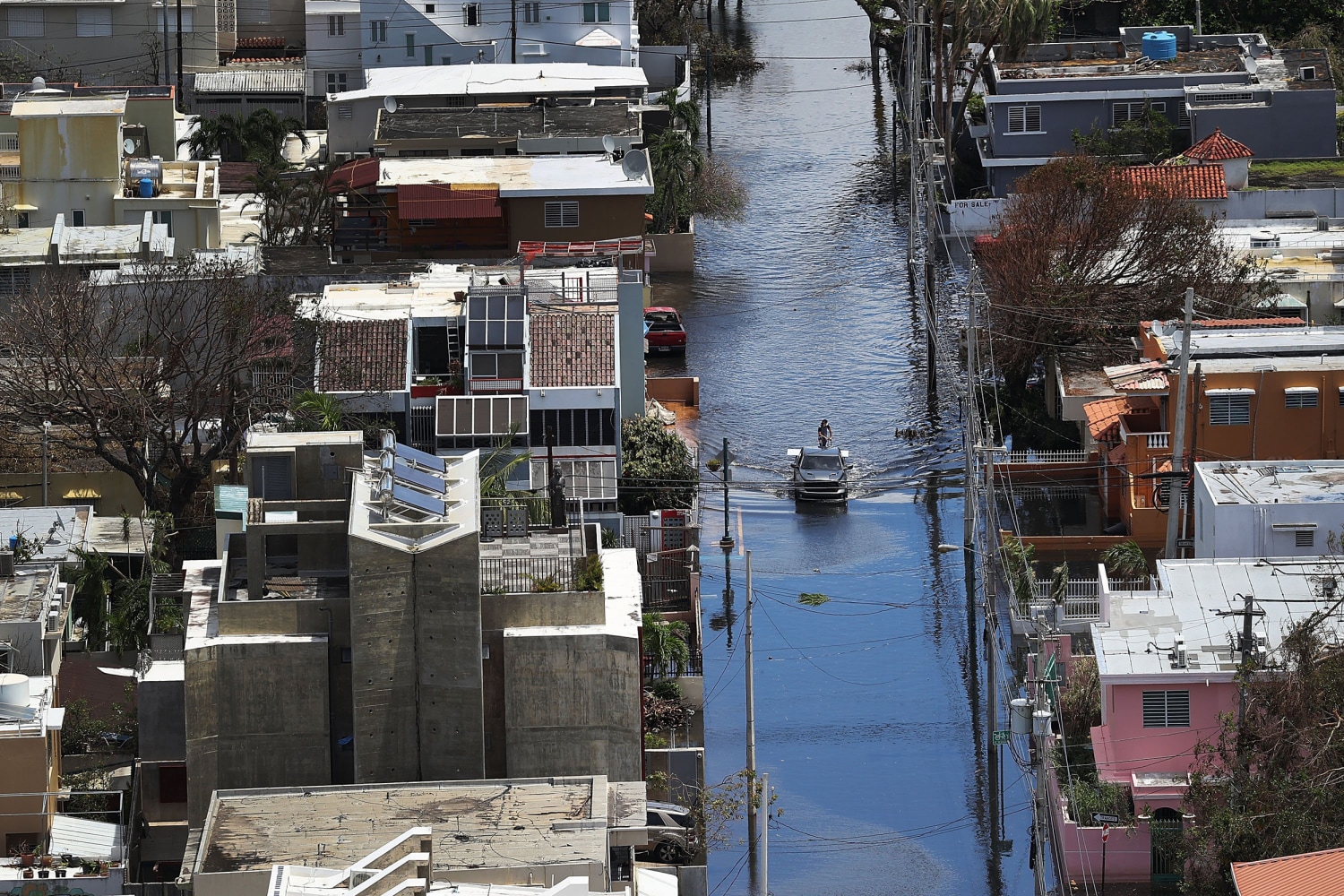
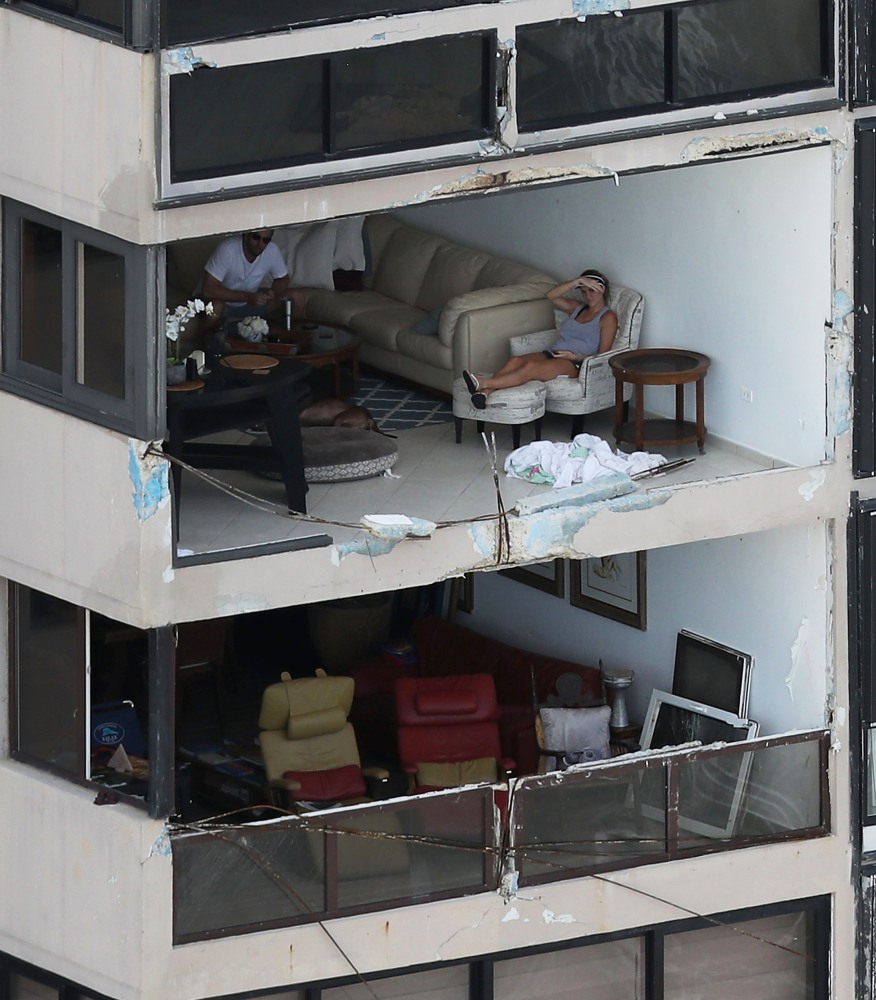
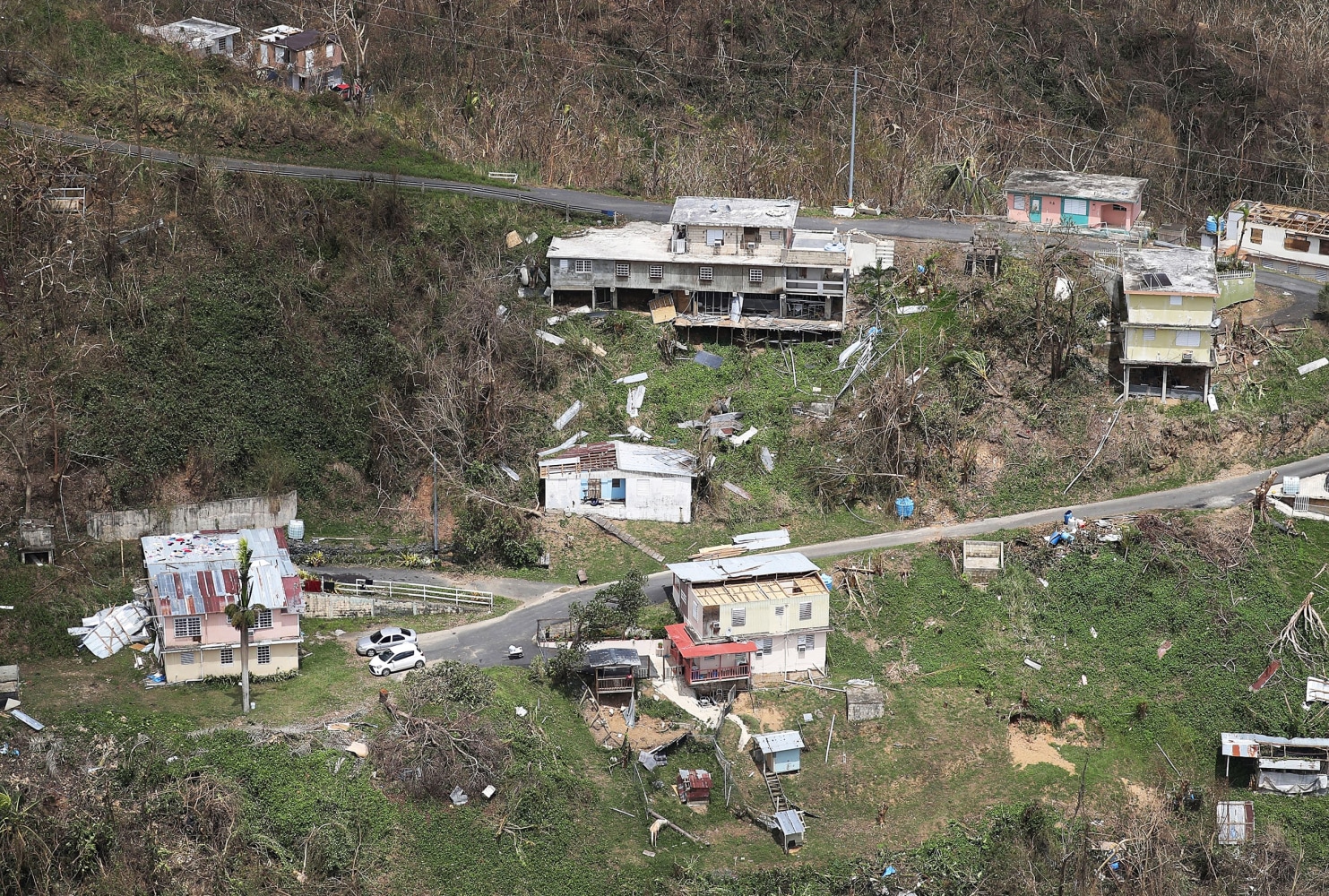
Puerto Ricans described desperate conditions on the hurricane-ravaged island and pleaded for more help from federal agencies on Monday, with some saying they felt the U.S. territory was being forgotten.
“It looks like a bomb went off,” said Monique Casablanca, 37, by phone from Ocean Park in the capital of San Juan.
“I’ve seen very little to no police presence, I’ve seen zero military presence. Nights are excruciating, there’s screaming, there’s gunshots. It’s hot, so it’s hard to sleep right now I haven’t slept in 48 hours,” said Casablanca, a rental property manager.
Casablanca said that while she had seen Federal Emergency Management Agency workers visit the area a few days ago, she had not seen them since.
“You feel like you’re forgotten. I’m in an area that’s flooded and there’s basically dead animals — cats, dogs, rats just floating around — the smell is crazy and I don’t see anyone here anywhere as of today or yesterday,” she said.
“We need more of everything, we need help,” she said.
Federal agencies rescuing people and delivering humanitarian aid to Puerto Rico in the wake of Hurricane Maria faced an island that remains largely without power, running water, fuel and access to cell service on Monday, five days after the storm first made landfall.
FEMA Administrator Brock Long and Homeland Security Adviser Tom Bossert arrived on the island on Monday and met Gov. Ricardo Rossello in San Juan as relief crews continued to work to provide much needed supplies to the island.
More than 10,000 federal staff were on the ground in Puerto Rico and the U.S. Virgin Islands, assisting with rescue efforts, restoring power and getting badly needed supplies to parts of the islands, FEMA said on Twitter Monday.
But White House Press Secretary Sarah Huckabee Sanders said Monday that Long and Bossert were sent to assess the damage from the ground.
“We’ve done unprecedented movement in terms of federal funding to provide for the people of PR and others that have been impacted by these storms,” she said during the White House press briefing. “We’ll continue to do so and continue to do everything that we can possibly under the federal government to provide assistance.”
Maria was the third major storm to hit U.S. shores in just a month, after Hurricanes Irma and Harvey wreaked havoc across the Caribbean and southeastern U.S.
Maria, which made landfall as a Category 4 hurricane, has been blamed for 16 deaths on Puerto Rico, officials said Monday.
William Booher, director of public affairs for FEMA, told the Associated Press on Saturday there was no difference in the agency’s response in Puerto Rico, compared with Texas, Louisiana or Florida after recent hurricanes. FEMA has had sufficient resources to deal with back-to-back-to-back hurricanes, he said, adding that “we’ve been able to address each one of them.”
Rossello also praised federal relief efforts on Monday and said FEMA was doing a “phenomenal job,” according to the Associated Press.
But earlier Monday, he also said the island was facing an “unprecedented disaster” and called for swift action from President Donald Trump’s administration.
“Given Puerto Rico’s fragile economic recovery prior to the storms, we ask the Trump Administration and U.S. Congress to take swift action to help Puerto Rico rebuild,” he said in a statement.
Meanwhile, advocates, residents and officials implored the federal government to send more help and take seriously the long-term impact Maria would have for Puerto Rico.
Frances Colón, founder of the Washington, D.C.-based non-profit Cenadores, said the “scale of the federal response right now is not on scale with the level of devastation.” Colón formed Cenadores to organize Puerto Ricans on the mainland to volunteer to help the island.
“We still have townships not reached. The government had a diesel ship parked in the bay and the government and National Guard is so maxed out they couldn’t ensure security so the fuel could reach its destination,” said Colón, who lives in Miami and worked 12 years for the State Department as a science and technology adviser. “We need boots on the ground from the federal government. We need FEMA, National Guard, a federal response at [Hurricane] Katrina scale.”
“Everyone is overwhelmed because the disaster is bigger than everyone,” she said.
“The response can’t be tepid. It’s been a week and still communication is down and there are towns that haven’t been reached.”
Armando Valdés Prieto, a lawyer who has been helping with volunteer operations in San Juan said he felt the sheer magnitude of the devastation on the island made distributing federal aid difficult.
“The scope and magnitude of what’s going on is so large that I’m not entirely sure that they really know where to start,” he said by phone Monday afternoon.
He said that while he felt a lot was being done, being unable to communicate with parts of the island compounded problems.
“We’re still kind of in an assessment phase where I guess it’s a little hard to gauge whether or not things are being done right,” he added.
Adding to the island’s woes is stifling heat. San Juan tied for its maximum temperature at 94 degrees on Sunday, according to the NWS.
“It’s really, really hot and there’s not a lot of respite from the heat,” said Valdés Prieto, adding that many people did not have electrical power and could not use their air conditioners.
And the island’s Aqueduct and Sewer Authority said Monday that only about 40 percent of their customers, or 500,000 people, had water service.
During the 2016 presidential race, Mr. Trump repeatedly harped on Hillary Clinton’s use of a private account as secretary of state, making it a centerpiece of his campaign and using it to paint her as untrustworthy. “We must not let her take her criminal scheme into the Oval Office,” Mr. Trump said last year. His campaign rallies often boiled over with chants of “Lock her up!”
They literally ran an entire campaign against Hillary Clinton for using private emails. The hypocrisy is stunninghttps://t.co/ZftkaTfm4n
The F.B.I. closed its investigation into Mrs. Clinton’s handling of classified information and recommended no charges. But even after becoming president, Mr. Trump has prodded the Justice Department to reinvestigate.
While the private email accounts spurred accusations of hypocrisy from Democrats, there are differences. Mrs. Clinton stored classified information on a private server, and she exclusively used a private account for her government work, sending or receiving tens of thousands of emails. The content and frequency of the Trump advisers’ emails remain unknown, but Trump administration officials described the use of personal accounts as sporadic. The emails have not been made public.
“All White House personnel have been instructed to use official email to conduct all government related work,” Sarah Huckabee Sanders, the White House press secretary, said Monday in response to questions about the emails. “They are further instructed that if they receive work-related communication on personal accounts, they should be forwarded to official email accounts.”
The acknowledgment of private email use came as the White House is responding to a wide-ranging Justice Department request for documents and emails as part of the special counsel investigation into Russian election meddling. The use of private emails has the potential to complicate that effort, but the White House said it was confident in its process.
“I am dealing with honorable professionals and getting what I need,” said Ty Cobb, the White House lawyer leading the response to the investigation. “I am doing all I can to ensure the special counsel receives the materials they request.”
It is not clear why even sporadic use continued after a campaign in which email habits became a source of controversy. A former administration official noted, though, that in many cases, people received emails to their personal accounts. In some instances, officials used their private accounts to talk with reporters.
Advertisement
Continue reading the main story
Most of Mr. Trump’s aides used popular commercial email services like Gmail. Mr. Kushner created a domain, IJKFamily.com, in December to host his family’s personal email. That domain was hosted by GoDaddy on a server in Arizona, records show.
Mr. Priebus and Mr. Bannon did not respond to messages seeking comment. A person close to Mr. Bannon insisted he almost never used his private email for work purposes. A White House spokesman did not immediately respond to a question for comment about the current officials.
James Norton, a former senior homeland security official during the George W. Bush administration, said private accounts pose security risks — a criticism often raised against Mrs. Clinton.
“These private email accounts become targets of phishing attacks or other types of ways of collecting information,” he said. “It’s an issue not only for the person who owns that account, but the person who is receiving the emails. It is introducing risk into the system.”
Richard W. Painter, a chief White House ethics lawyer under Mr. Bush who is now the vice chairman of Citizens for Responsibility and Ethics in Washington, a watchdog group, said that there is often a “gray area” over what is considered official business. But, he said, “If it has anything to do with the president’s policy, including defending the president’s policy to the press, it’s very difficult to escape that being official.”
“I think Kushner was sloppy to do this,” he said. “I think Hillary was sloppy. I don’t think any of it was criminal.”
The special counsel, Robert S. Mueller III, is leading the investigation into Russian interference in the presidential election and whether anyone around Mr. Trump was involved. Mr. Mueller’s team has the power to subpoena a company to turn over customer emails.
White House officials hope it does not come to that. They have been hurrying to provide Mr. Mueller with the documents he has asked for. Mr. Cobb has described it as “full cooperation mode.” He has reminded White House aides to search their private accounts for records to give to Mr. Mueller.
Advertisement
Continue reading the main story
The White House views such cooperation as its best chance to escape the glare of a special counsel investigation that also touches on Mr. Trump’s actions as president.
The private email accounts immediately triggered questions in Congress. Representative Trey Gowdy, Republican of South Carolina, who was among those who most vociferously criticized Mrs. Clinton’s email use, sent a letter to the White House and federal agencies asking about the Trump administration’s personal email use.
Representative Elijah E. Cummings, the senior Democrat on the House Oversight and Government Reform Committee, asked the White House to make sure that none of Mr. Kushner’s emails are deleted.
“Before requesting copies or calling for the public release of all official emails you sent or received on your personal email account,” Mr. Cummings wrote, “I first request that you preserve all official records and copies of records in your custody or control and that you provide the information requested below.”
“Your actions in response to the preservation request and the information you provide in response to this letter will help determine the next steps in this investigation,” he added.
Mr. Cummings noted that Trump administration officials had previously said that senior White House officials did not use multiple email accounts. And he reminded the White House about the grilling that Mrs. Clinton received from congressional Republicans over her email practices.
Both political parties have fought for years over the use of private email accounts. Long before Mrs. Clinton’s emails were a campaign issue, Democrats criticized members of the George W. Bush administration for the practice.
Ms. Collins, one of three Republican senators who opposed the last repeal attempt in July, described the latest plan as “deeply flawed.” She expressed concerns about cuts to Medicaid as well as the rolling back of protections for people with pre-existing medical conditions.
“Health care is a deeply personal, complex issue that affects every single one of us and one-sixth of the American economy,” Ms. Collins said in a statement, lamenting the rushed process and the content of legislation that has shifted as Republican leaders scrambled for votes. “Sweeping reforms to our health care system and to Medicaid can’t be done well in a compressed time frame, especially when the actual bill is a moving target.”
The Senate majority leader, Mitch McConnell of Kentucky, now faces the unpalatable choice of admitting defeat or moving ahead with a vote that appears certain to fail.
Republican leaders in the Senate can afford to lose only two of their members, and they now have three firm opponents within their ranks: Rand Paul of Kentucky, John McCain of Arizona and Ms. Collins. Additionally, Senator Ted Cruz, Republican of Texas, has withheld his support and requested changes to the bill.
Time is not on their side: Republicans have only until the end of the month to pass the bill through the Senate while being protected from a Democratic filibuster.
Beginning in October, Republicans would need Democratic votes in order to pass a repeal bill, a seeming impossibility given that Democratic senators have been unified in opposition to the repeal push.
Some Republican senators have suggested starting over, with parliamentary language in a new budget blueprint that once again would shield a repeal bill from a filibuster. But that could terribly complicate Republican efforts to overhaul the tax code, a risk the leadership may not want to take.
The senators released a revised version of their bill on Monday morning, hoping to win over holdout Republicans in part by shifting more funds to states like Alaska and Maine. The bill would take money provided under the Affordable Care Act for insurance subsidies and the expansion of Medicaid and send it to states, with vast new discretion over how to use it for health care or coverage.
But writing a repeal bill that could win over at least 50 of the 52 Republican senators has proved extraordinarily difficult, and putting together a complicated bill against the backdrop of a ticking clock only added to the challenge. Insurers, hospitals, doctors and patient advocacy groups assailed the proposal, as did the late-night talk show host Jimmy Kimmel.
The Capitol complex looked at times like a hospital ward on Monday as patients swarmed through the corridors, pleading with senators not to take away their health insurance. Some wore T-shirts that said, “I Am a Pre-Existing Condition.”
The Senate Finance Committee held a hearing on the repeal bill on Monday, and it was immediately disrupted by people in the audience shouting opposition to the proposal. “No cuts to Medicaid,” they chanted. “Save our liberty!” Capitol police officers removed the protesters, some of whom were in wheelchairs.
As Mr. Cassidy and Mr. Graham revised their bill to try to build support, critics asserted that their last-minute changes further weakened protections for patients, including those with cancer and other pre-existing conditions.
Photo
Senator Susan Collins, Republican of Maine, at the Capitol this month. Credit
Tom Brenner/The New York Times
Dick Woodruff, senior vice president at the lobbying arm of the American Cancer Society, said that under the bill, patient protections provided by the Affordable Care Act would be up to each state to decide.
“Some states could decide not to cover even preventive services, like cancer screenings, routine mammography or colonoscopy,” Mr. Woodruff said.
Advertisement
Continue reading the main story
Republican senators had to make up their minds with little information about the measure’s implications.
Newsletter Sign Up
Continue reading the main story
Thank you for subscribing.
An error has occurred. Please try again later.
You are already subscribed to this email.
View all New York Times newsletters.
See Sample
Manage Email Preferences
Not you?
Privacy Policy
Opt out or contact us anytime
The nonpartisan Congressional Budget Office said Monday that “millions of additional people would be uninsured” under the Graham-Cassidy bill, compared with the number of people expected to lack coverage under current law.
“Enrollment in Medicaid would be substantially lower because of large reductions in federal funding for that program,” the budget office said.
But the budget office said it did not have time to produce a more complete assessment, leaving senators without specifics on how the bill would affect coverage and health insurance premiums.
The rushed process contributed to the bill’s demise.
Mr. McCain, who killed the last repeal effort in July with a dramatic middle-of-the-night vote, faulted Republicans for trying to pass sweeping health care legislation without the participation of Democrats or extensive public deliberations.
Mr. Paul had previously said he would oppose the Graham-Cassidy bill because it did not go far enough in repealing the health law. On Monday, he continued to denounce it as a “fake repeal.”
Mr. Paul presented himself as open to compromise, voicing support for a narrower measure. But he rejected the Graham-Cassidy bill’s core concept of providing block grants to the states to use for health care — leaving little room for Republican leaders to win his vote unless they radically altered the legislation.
“I think if you vote for this bill, you put your stamp of approval on a trillion dollars’ worth of Obamacare spending,” he said.
Mr. Paul was not the only conservative with reservations. Mr. Cruz said on Sunday that he had not yet been won over and was seeking changes to the repeal plan, though he said he wanted to ultimately wind up in favor of the bill. An aide to Mr. Cruz said on Monday that he still wanted to see changes.
Advertisement
Continue reading the main story
Before Ms. Collins’s announcement on Monday, Mr. Trump expressed frustration that Republicans had talked for years about repealing and replacing the Affordable Care Act but failed to deliver now that a Republican was in the White House.
On the “Rick Bubba Show,” a radio program, Mr. Trump singled out Mr. McCain, calling his vote in July “a tremendous slap in the face of the Republican Party.” And the president seemed resigned to defeat in the latest attempt at repeal.
“We’re going to lose two or three votes,” he said, “and that’s the end of that.”
CHICAGO — In a sign of solidarity, the Pittsburgh Steelers stayed in the locker room during the national anthem before their 1 p.m. ET kickoff with the Chicago Bears.
Players for the Seattle Seahawks and Tennessee Titans did the same before their 4 p.m. ET kickoff.
An NFL official told ESPN NFL Insider Adam Schefter that no fines are being considered for those players who stayed in the locker room during the anthem.
Locked arms, kneeling dominate NFL anthems
It started early Sunday in London and continued throughout the NFL as players, coaches and even owners locked arms or knelt during the national anthem.
DE Wolfe on protests: Worse places than U.S.
Broncos defensive end Derek Wolfe told ESPN’s Josina Anderson that he believes it’s “disrespectful” to Americans who have lost their lives in battle to protest during the national anthem.
Petty, Childress: Protests carry consequences
NASCAR team owners Richard Childress and Richard Petty hinted that anybody working for them who protested the national anthem would face serious consequences.
As the anthem began in Soldier Field, several Steelers coaches were on the sideline, including head coach Mike Tomlin, while the players were not present. Offensive coordinator Todd Haley, offensive line coach Mike Munchak and running backs coach James Saxon also were spotted.
Players took the field within a few seconds of the anthem’s end, just after fireworks launched; quarterback Ben Roethlisberger was one of the first players out of the tunnel. Left tackle Alejandro Villanueva, an Army Ranger who served in Afghanistan, was seen on the CBS broadcast at the edge of the tunnel during the anthem, hand over heart.
In Nashville, the Seahawks and Titans both issued statements saying their players were united in their actions.
“As a team, we have decided we will not participate in the national anthem,” the Seahawks’ statement said. “We will not stand for the injustice that has plagued people of color in this country. Out of love for our country and in honor of the sacrifices made on our behalf, we unite to oppose those that would deny our most basic freedoms. We remain committed in continuing to work towards equality and justice for all.”
Seahawks general manager John Schneider said in a pregame radio interview that coach Pete Carroll met with a few players individually Saturday, prior to a “pretty emotional” meeting by the entire team later that night.
The Seahawks walked onto the field after the anthem with players locking arms.
“We’re just staying together,” Carroll said in a pregame radio interview. “This is a day that we all want to make sure that we’re together and celebrating the opportunity to play this game together in the best way we can possible.”
The Titans took a similar approach with their statement.
“As a team, we wanted to be unified in our actions today. The players jointly decided this was the best course of action. Our commitment to the military and our community is resolute and the absence of our team for the national anthem shouldn’t be misconstrued as unpatriotic.”
Steelers coach told CBS’ Jamie Erdahl before the game that the team wanted to “remove ourselves from the circumstance” and means no disrespect.
“We’re not going to play politics,” Tomlin said. “We’re football players, we’re football coaches. We’re not participating in the anthem today — not to be disrespectful to the anthem, but to remove ourselves from the circumstance.
“People shouldn’t have to choose. If a guy wants to go about his normal business and participate in the anthem, he shouldn’t be forced to choose sides. If a guy feels the need to do something, he shouldn’t be separated from his teammate who chooses not to.”
The Steelers did not protest the anthem last year and had stayed relatively neutral on the national discussion, but President Donald Trump’s verbal attack on NFL players who protest appears to have changed things.
Team president Art Rooney II released a statement regarding the pregame protest.
Several Steelers leaders, including defensive end Cameron Heyward, linebacker James Harrison and others, were involved in the discussion about Sunday’s protest, one team source said. Those discussions took hold Saturday as the team traveled to Chicago and got situated at the team hotel.
“We will not be divided by this,” Tomlin said after the game. “We’ve got a group of men in there that come from different socio-economic backgrounds, races, creeds, ethnicities, religions and so forth. That’s football. That’s a lot of team sports. But because of our position we get drug into bulls—, to be quite honest with you. Some have opinions; some don’t. We wanted to protect those who don’t and we wanted to protect those who do.”
ESPN’s Brady Henderson and Cameron Wolfe contributed to this report.
Police say one person was killed, multiple people wounded
One woman was killed and seven other people were hurt after a shooting suspect, identified as former churchgoer Emanuel Kidega Samson, opened fire at a Tennessee church Sunday, police said.
Samson, identified as a 25-year-old man who immigrated from Sudan two decades ago, is suspected of bringing two pistols and a mask to Burnette Chapel Church of Christ in Antioch, southeast of Nashville, before opening fire just after 11 a.m. He fired “multiple rounds,” police said in a news conference.
Police identified Emanuel Kidega Samson, 25, as the suspected gunman who opened fire at a church in Antioch, Tennessee, on Sunday.
(Metropolitan Nashville Police Department)
Metropolitan Nashville Police Department tweeted that Samson had been released from the hospital and will be charged with murder and attempted murder. In addition, federal officials tell Fox News the FBI will be initiating a civil rights investigation in association with the shooting at the predominantly white church.
An usher, identified as Robert Engle, 22, confronted the gunman at one point and was pistol-whipped, causing “significant injury around his head,” police added. They said Engle went to his own car, grabbed a pistol and headed back into the church.
Law enforcement confirmed Samson is a legal U.S. resident who immigrated from Sudan in 1996.
It was initially reported that the gunman shot himself, although police said it’s unclear whether he shot himself or the gun unintentionally discharged during his scuffle with Engle.
Police said that Burnette Chapel churchgoers recognized Samson as attending their church one to two years ago, but noted he hadn’t attended services “in quite a while.”
One woman was killed and seven others wounded when a gunman opened fire at the Burnette Chapel Church of Christ on Sunday.
(Metropolitan Nashville Police Department)
The woman who was shot and killed in the church parking lot, identified as Melanie Smith, 39, was walking to her car when she was hit, police said.
The gunman, with his blue vehicle still running in the parking lot, then entered the back of the church and shot six people – three women and three men – who were rushed to the hospital, police said.
Police identified those being treated at Vanderbilt University Medical Center and in stable condition as: William Jenkins, 83; Marlene Jenkins, 84; Peggy Span, 65; and Linda Bush, 68. David Span, 60, was also being treated at Vanderbilt, but was listed as in critical but stable condition.
Katherine Dickerson, 64, was in stable condition at Skyline Medical Center. Engle was also being treated at Skyline.
Metropolitan Nashville Police Chief Steve Anderson called Engle a “hero” for his actions at the church Sunday.
Nashville police chief Steve Anderson says of the usher who stopped the gunman:”He’s the hero. He’s the person who stopped this madness.”
Several witnesses claimed the shooter was wearing a “clown mask” when he opened fire, but police said what he wore more closely resembled a ski mask.
Megan Barry, mayor of Metropolitan Nashville and Davidson County, said in a statement that the shooting “is a terrible tragedy for our city. My heart aches for the family and friends of the deceased as well as for the wounded victims and their loved ones.”
Gov. Bill Haslam added that he and his wife, Crissy, were praying for the victims and “committed to supporting the Antioch community in the aftermath of this tragedy.”
The church has a weekly service starting at 10 a.m. Sunday. The surrounding area was closed off as police investigated the situation.
Fox News’ Jake Gibson and The Associated Press contributed to this report.