Sen. John McCain left the nation’s capital Sunday to spend Christmas in Arizona with his family as he battles brain cancer, giving his Republican Party one less vote as it is expected this week to attempt to push through a contentious tax plan along party lines.
President Trump told reporters Sunday that McCain and his wife, Cindy McCain, have “headed back [to Arizona], but I understand he’ll come if we ever needed his help, which hopefully we won’t.” He added: “But the word is John will come back if we need his vote. It’s too bad. He’s going through a very tough time, there’s no question about it. But he will come back if we need his vote.”
Trump said he spoke to Cindy McCain by phone Sunday. “I wished her well. I wish John well,” he said.
McCain was hospitalized Wednesday while receiving chemotherapy treatment at Walter Reed National Military Medical Center in Bethesda and at the nearby National Institutes of Health. He received a diagnosis this year of glioblastoma, an aggressive, malignant brain tumor that can cause headaches, seizures, blurred vision and other symptoms.
In a brief statement, the senator’s office provided an assessment from Mark Gilbert, chief of neuro-oncology at the National Institutes of Health’s National Cancer Institute.
“Senator McCain has responded well to treatment he received at Walter Reed Medical Center for a viral infection and continues to improve,” Gilbert said, according to the Associated Press. “An evaluation of his underlying cancer shows he is responding positively to ongoing treatment.”
News of McCain’s travel first emerged Sunday afternoon after his daughter Meghan McCain tweeted about the family’s holiday plans.
“Thank you to everyone for their kind words,” she wrote. “My father is doing well and we are all looking forward to spending Christmas together in Arizona. If you’re feeling charitable this Christmas @HeadfortheCure or @NBTStweets to help find a cure for brain cancer is what I recommend.”
McCain, 81, missed several Senate votes last week while at Walter Reed. He voted for the initial version of the tax plan, which includes sweeping tax cuts and initially passed the Senate with 51 votes. Without McCain, Republican leaders have a razor-thin margin to pass the final version, which has been in House-Senate negotiations and cannot afford any more defections.
But for Republicans, the bar to pass the legislation isn’t quite as high as initially feared. Sens. Marco Rubio (R-Fla.) and Bob Corker (R-Tenn.) said last week that they will vote for the measure after indicating earlier that they would not.
McCain has been in “good spirits” while receiving treatment, Ben Domenech, Meghan McCain’s husband, said in an appearance Sunday on CBS’s “Face the Nation.”
“I’m happy to say that he’s doing well,” said Domenech, a conservative writer. “The truth is that as anyone knows whose family has battled cancer or any significant disease, that oftentimes there are side effects of treatment that you have. The senator has been through a round of chemo and he was hospitalized this week at Walter Reed.”
McCain, Domenech added, “remains one of the toughest men on the face of the earth, as you know.”
Hartsfield-Jackson International Airport in Atlanta lost power on Sunday. USA TODAY
A major power outage halted air traffic Sunday at Hartsfield-Jackson Atlanta International Airport, grounding all of the hub’s outgoing flights and halting incoming traffic for tens of thousands of travelers hoping to land at the world’s busiest airport.
The disruption, coming just eight days before Christmas, promises to wreak havoc on one of the busiest travel weeks of the year.
The outage, reported around 1 p.m. ET, forced travelers out of the darkened terminal and into an icy rain for hours, witnesses reported. It stranded others on Atlanta’s tarmac as they waited to get off of incoming flights.
Others were stranded on electric trams that run between terminals — they had to be rescued by firefighters.
Around 7:30 p.m., airport officials said power had been restored to the airport’s Concourse F. Crews, they said, were working “with great urgency” to restore power to the rest of the airport, .
As utility crews worked to fix the outage, passengers described a chaotic scene inside a smoke-filled terminal.
Today in the Sky: Power outage hits Atlanta airport; more than 600 flights canceled
List: List: The world’s 20 busiest airports, 2016
Traveler Olivia Dorfman told The Atlanta Journal-Constitution she was about to board a flight home to Indiana when the lights went out. Ten minutes later, she said, “a buzzer went off in the background — that has been going on for over an hour and every so often bright lights flash in the ceiling.”
Dorfman said smoke filled the area near a gate in the D Concourse. She said at least one other passenger described the acrid smoke as that of an electrical fire.
At various times, airport workers tried to herd passengers toward the smoky area and away from it, Dorfman said. “This has been very bizarre. No one seems to know what they’re doing.”
The Federal Aviation Administration (FAA) ordered a ground stop for flights into the airport, holding them at departure airports across the world. The FAA said departures also were delayed.
Please let the people standing outside on the tarmac back into the building, it is too cold outside.
Several airlines, including Southwest and Delta, said they were canceling flights due to the power outage. In a statement, Delta said it had canceled more than 450 flights and was “working to deplane customers from aircraft that have not been able to park at a gate due to the outage.”
Country music star Travis Tritt tweeted late Sunday afternoon that he was stuck in Ft. Lauderdale, Fla., because of the outage. “How on earth can the busiest airport on earth have power down and no backup generators up and running?” he wrote. “This makes ATL airport designers look dumb as hell!”
Flight tracker: Is your flight on time?
Late Sunday, Georgia Power said it the outage was likely caused by an electrical fire at an underground facility. It expected to have electricity restored to the airport by midnight.
Hartsfield-Jackson last year handled 104,171,935 passengers, the most of any airport worldwide.
In a statement the FAA said the airport’s tower could operate normally, but that departures were delayed “because airport equipment in the terminals is not working.”
Malou Cadavillo and her 16-month-old granddaughter sat on a motionless luggage carousel waiting for a car seat after making it to baggage claim by the light of fellow passengers’ mobile phones.
Cadavillo told The Atlanta Journal-Constitution that her grandsons, 7 and 11, were uneasy. One of them added, “I hope there’s no monsters down here.”
Contributing: Michael King, WXIA-TV, Atlanta.
Archives: Snow in Atlanta! Flight cancellations spike as storm intensifies
President Trump appeared to back the claims of a lawyer for his presidential transition team that special counsel Robert S. Mueller III improperly obtained Trump associates’ emails, saying Sunday that “a lot of lawyers thought that was pretty sad.”
Trump also said he has no plan to fire Mueller, who is investigating Russian interference in the presidential election, including the possibility of coordination with the Trump campaign. Mueller’s investigation has resulted in charges against two people and guilty pleas by two others, including former national security adviser Michael Flynn.
“Not looking good. It’s not looking good,” Trump said when asked whether Mueller had received the transition documents improperly.
A lawyer for Trump’s transition team contends that Mueller should not have been able to obtain a trove of emails from the period between Trump’s 2016 election victory and his Jan. 20 inauguration without the consent of transition officials.
The batch of emails totaling thousands of pages of communications was provided to Mueller by the federal General Services Administration, the lawyer representing the organization known as Trump for America said in a letter delivered to congressional investigators Saturday.
“This morning we sent a letter to Congress concerning the unauthorized sharing of private and transition emails with the Mueller team,” lawyer Kory Langhofer said in an interview Saturday.
A spokesman for Mueller’s team rejected the allegations of impropriety.
“When we have obtained emails in the course of our ongoing criminal investigation, we have secured either the account owner’s consent or appropriate criminal process,” said Peter Carr, a spokesman for Mueller’s office.
The letter from Langhofer is the latest in a series of legal and public relations moves by Trump’s allies to attempt to undermine Mueller’s investigation and portray it as politically motivated.
“It’s quite sad to see that. My people were very upset,” Trump told reporters at the White House about the transition emails upon his return from a weekend trip to Camp David.
“I can’t imagine there’s anything on them, because as we said there’s no collusion,” Trump said. “There was no collusion whatsoever.”
Some of the president’s supporters have urged him to fire Mueller, but the White House has consistently said there is no discussion about getting rid of the special counsel.
Special Counsel Robert S. Mueller III departs after a meeting with members of the Senate Judiciary Committee on June 17. (J. Scott Applewhite/AP)
“No, I’m not,” Trump responded Sunday when asked if he intended to fire Mueller.
The letter from Langhofer, who was counsel to Trump for America, alleged that career employees of the GSA improperly provided privileged communications to investigators working for Mueller.
Transition documents are private property, not government records, the transition team contends. The letter invokes federal law and what Langhofer calls decades of precedent to argue that Mueller overstepped.
The transfer of transition documents is “unlawful conduct that undermines the Presidential Transition Act of 1963,” the letter said, “and will impair the ability of future presidential transition teams to candidly discuss policy and internal matters that benefit the country as a whole.”
The letter was sent to the House Oversight and Government Reform Committee as well as the Senate Homeland Security and Governmental Affairs Committee.
The Trump transition alleges that the handover was done by “career staff at the General Services Administration” and suggested that those employees may have had political motives.
But some legal experts challenged Langhofer’s charge that anything improper occurred.
Randall Eliason, a former federal prosecutor who teaches white collar crime at George Washington University Law School, said it was not at all surprising that Mueller’s team sought Trump transition emails. “It would be almost prosecutorial misconduct for them not to,” he said. He said it was also not surprising that Mueller would ask GSA for emails sent using government accounts.
“It’s not your personal email. If it ends in .gov, you don’t have any expectation of privacy,” he said.
But he said if Trump’s team had a valid legal claim, there is a standard avenue to pursue — they would file a sealed motion to the judge supervising the grand jury and ask the judge to rule the emails were improperly seized and provide a remedy, like requiring Mueller’s team to return the emails or excluding their use in the investigation.
“You go to the judge and complain,” he said. “You don’t issue a press release or go to Congress. It appears from the outside that this is part of a pattern of trying to undermine Mueller’s investigation.”
Eliason said he could think of “no apparent privilege” that would apply to emails sent between private citizens who have not yet joined the government, as Trump’s team suggested.
Trump’s lawyers were given a courtesy notice that the transition team lawyer planned to register a complaint, according to a person familiar with the discussion. The transition team lawyer learned of the records being provided to Mueller by GSA on Tuesday when a member of the transition was being interviewed by investigators and was shown a copy of their own email using transition account.
One White House adviser disputed pundits’ and lawyers’ claims that the only way the transition could object was to file a motion before the chief judge overseeing the grand jury.
“This wasn’t a subpoena pursuant to a grand jury. GSA just turned them over,” the adviser said.
The president’s lawyers are scheduled to meet with Muller’s team later this week for a status conference. His lawyers are expected to ask the special counsel if there are any other outstanding questions or materials that the team needs before it brings its probe to conclusion.
Democrats were quick to challenge the charge that either GSA or Mueller’s team acted improperly.
Rep. Elijah E. Cummings of Maryland, the senior Democrat on the Oversight and Government Reform Committee, said the 1963 Presidential Transition Act “simply does not support withholding transition team emails from criminal investigators.”
“The President’s lawyers have said they want to fully comply with Special Counsel Mueller’s investigation, so it is odd that they now suggest they would have withheld key documents from federal investigators,” Cummings said in a statement.
On Sunday, a Republican aide to the House Oversight and Government Reform Committee said the specific issues raised in Langhofer’s letter should be dealt with by the legal system — not Congress.
“To the extent the letter raises issues on how to improve subsequent transitions, the Committee takes the letter under advisement,” the aide said in an email.
The GSA provided facilities to the Trump transition team in the weeks before Trump’s Jan. 20 inauguration. Langhofer claims that GSA had assured Trump for America that while it retained copies of transition records, it would not release them without consulting the organization.
GSA Deputy Counsel Lenny Loewentritt disputed Langhofer’s claim in an interview with BuzzFeed News Saturday. He told the news site that members of the transition team were informed that by using devices provided by GSA, materials “would not be held back in any law enforcement” requests.
GSA did not respond to a request for comment from The Washington Post.
Mueller’s team, Langhofer’s letter said, “has extensively used the materials in question, including portions that are susceptible to claims of privilege, and without notifying TFA or taking customary precautions to protect TFA’s rights and privileges.”
This story has been updated to include analysis of Langhofer’s letter from a legal expert, a response from a key Democratic congressman and additional context.
Mike DeBonis, Rosalind S. Helderman and Carol Leonnig contributed to this report.
Just before leaving his Defense Department job two months ago, intelligence officer Luis Elizondo quietly arranged to secure the release of three of the most unusual videos in the Pentagon’s secret vaults: raw footage from encounters between fighter jets and “anomalous aerial vehicles” — military jargon for UFOs.
The videos, all taken from cockpit cameras, show pilots struggling to lock their radars on oval-shaped vessels that, on screen, look vaguely like giant flying Tic Tacs. The strange aircraft — no claims are made about their possible origins or makeup — appear to hover briefly before sprinting away at speeds that elicit gasps and shouts from the pilots.
Elizondo, in an internal Pentagon memo requesting that the videos be cleared for public viewing, argued that the images could help educate pilots and improve aviation safety. But in interviews, he said his ultimate intention was to shed light on a little-known program Elizondo himself ran for seven years: a low-key Defense Department operation to collect and analyze reported UFO sightings.
The existence of the program, known as the Advanced Aviation Threat Identification Program, was confirmed officially for the first time Saturday by a Pentagon spokesman. The acknowledgment came in response to media inquiries, which were generated in part by a start-up company Elizondo has joined since retirement. The private company specializes in promoting UFO research for scientific and entertainment purposes.
Current and former Pentagon officials confirm that the Pentagon program has been in existence since 2007 and was formed for the purpose of collecting and analyzing a wide range of “anomalous aerospace threats” ranging from advanced aircraft fielded by traditional U.S. adversaries to commercial drones to possible alien encounters. It is a rare instance of ongoing government investigations into a UFO phenomenon that was the subject of multiple official inquiries in the 1950s and 1960s.
Spending for the program totaled at least $22 million, according to former Pentagon officials and documents seen by The Washington Post, but the funding officially ended in 2012. “It was determined that there were other, higher priority issues that merited funding and it was in the best interest of the DOD to make a change,” Pentagon spokesman Tom Crosson explained in a statement.
But officials familiar with the initiative say the collection effort continued as recently as last month. The program operated jointly out of the Pentagon and, at least for a time, an underground complex in Las Vegas managed by Bigelow Aerospace, a defense contractor that builds modules for space stations. It generated at least one report, a 490-page volume that describes alleged UFO sightings in the United States and numerous foreign countries over multiple decades.
Neither the Pentagon nor any of the program’s managers have claimed conclusive proof of extraterrestrial visitors, but Elizondo, citing accounts and data collected by his office over a decade, argues that the videos and other evidence failed to generate the kind of high-level attention he believes is warranted. As part of his decision to leave the Pentagon, he not only sought the release of videos but also penned a letter to Defense Secretary Jim Mattis complaining that a potential security threat was being ignored.
“Despite overwhelming evidence at both the classified and unclassified levels, certain individuals in the [Defense] Department remain staunchly opposed to further research on what could be a tactical threat to our pilots, sailors and soldiers, and perhaps even an existential threat to our national security,” Elizondo said in the letter, a copy of which was provided to The Post.
The first public revelations of the program came in a video conference aired in October by To the Stars Academy of Arts and Sciences, the firm Elizondo joined as a consultant after retiring from his Pentagon job. The New York Times and Politico reported the existence of the program on their websites Saturday. The Washington Post conducted several confidential interviews over two months with Elizondo and Christopher Mellon, a former deputy assistant secretary of defense for intelligence who also is an officer of the private firm.
Documents provided by the former officials included letters of support by former Senate majority leader Harry M. Reid (D-Nev.), a key backer of the initiative who helped secure funding for the program and sought to ensure a high degree of secrecy. Elizondo said knowledge of the program was limited, even within the Pentagon itself. He said the program had multiple enemies at senior levels of the department, from officials who were either skeptical or ideologically opposed to AATIP’s mission.
“I was honored to serve at the DOD and took my mission of exploring unexplained aerial phenomena quite seriously,” Elizondo said. “In the end, however, I couldn’t carry out that mission, because the department — which was understandably overstretched — couldn’t give it the resources that the mounting evidence deserved.”
It is difficult to draw conclusions about the nature of the unidentified vessels from the videos alone. Experts generally urged caution, explaining that reported UFO sightings often turn out of have innocuous explanations.
A retired Navy pilot contacted by The Post who was involved in a 2004 encounter depicted in one of the videos confirmed that the images accurately reflected his recollection of the events. The pilot would only speak on the condition of anonymity.
Elizondo, a 22-year veteran of the department who has held top security clearance and worked on secret counterintelligence missions, said he chose to join the private venture because he believed it was the best way to continue the work he was unable to complete as a government employee.
“I left to find an environment where investigating these phenomena is priority number one,” he said.
BIG CORPORATIONS Industries like big retailers will benefit from the new corporate rate of 21 percent, since those companies pay relatively close to the full 35 percent rate. Other aspects of the corporate tax cuts will be enjoyed by an array of multinational industries, particularly technology and pharmaceutical companies, like Google, Facebook, Apple, Johnson Johnson and Pfizer. Such multinational companies have accumulated nearly $3 trillion offshore, mostly in tax haven subsidiaries, untouched by the United States taxman. The tax bill will force those companies to gradually bring that money home, but it will be taxed at rates ranging from 8 percent to 15.5 percent. That’s far lower than the current 35 percent tax rate on corporate profits and even lower than the new 21 percent rate.
Plus, American companies will no longer owe full corporate taxes on future profits they say they earn abroad, providing more incentive to push income into tax haven subsidiaries. The law even includes provisions that could encourage companies to move workers abroad, despite pledges to do the opposite.
MULTIMILLIONAIRES An exemption for estates that owe what Republicans call the “death tax” was lifted to $22 million from $11 million. That doesn’t matter much to billionaires like Charles Koch, but means a big tax cut for people with estates worth tens of millions of dollars.
Plus, the top rate applying to wages and interest income would be cut to 37 percent from 39.6 percent.
PRIVATE EQUITY MANAGERS During the campaign, Donald Trump railed against wealthy investment managers who, thanks to the so-called carried interest loophole, pay taxes on the majority of their pay at a lower capital gains rates. But the purported reform to this tax provision will affect few if any private equity managers, leaving the loophole intact.
Photo
Demonstrators protesting the tax plan last month. Thirteen million fewer Americans are projected to have health coverage. Credit
Michael Reynolds/European Pressphoto Agency
PRIVATE SCHOOLS AND THE PEOPLE WHO CAN AFFORD THEM Parents would be eligible to use a type of tax-preferred savings plan — known as a 529 plan — to save for their children’s’ elementary and secondary education. Right now, those savings plans are only eligible for college. But they would be expanded to allow for up to $10,000 a year for tuition at private and religious schools.
THE LIQUOR BUSINESS Excise taxes for small brewers and distillers are reduced in the final agreement. Those industries are dominated by entrepreneurial small businesses often based in rural areas. They also have strong lobbyists, and many are based in states with powerful senators, like Senator Rob Portman of Ohio. Mr. Portman, who tucked a provision to help craft brewers into the Senate legislation, was part of the small team of lawmakers who merged the two bills into a final version.
Advertisement
Continue reading the main story
ARCHITECTS AND ENGINEERS They were originally restricted in how much they could benefit from the new pass-through provision. If they structure their businesses a certain way, the final version will let them benefit fully.
Newsletter Sign Up
Continue reading the main story
Thank you for subscribing.
An error has occurred. Please try again later.
You are already subscribed to this email.
View all New York Times newsletters.
See Sample
Manage Email Preferences
Not you?
Privacy Policy
Opt out or contact us anytime
TAX ACCOUNTANTS AND LAWYERS Mr. Trump once said his “dream” was to put tax preparation services out of business by simplifying the tax code. But the rushed legislation will probably have the opposite effect, as individuals try and make sense of the complicated new provisions, staggered dates and new rates. The uncertainty and confusion will probably create numerous new opportunities to game the system: tax preparers are sure to see a boom in business advising clients on how to restructure their employment and compensation arrangements to take advantage of the lower tax rates on income reported by corporations and pass-through entities.
LOSERS
PEOPLE BUYING HEALTH INSURANCE With the repeal of the individual mandate, some people who currently buy health insurance because they are required by law to do so are expected to go without coverage. According to the Congressional Budget Office, healthier people are more likely to drop their insurance, leaving insurers stuck with more people who are older and ailing. This is expected to make average insurance premiums on the individual market go up by about 10 percent. All told, 13 million fewer Americans are projected to have health coverage, according to the Congressional Budget Office.
INDIVIDUAL TAXPAYERS IN THE FUTURE To stay under the $1.5 trillion limit for new deficits lawmakers set for themselves, they opted to make the cuts for individuals and families temporary, expiring at the end of 2025 — even as the corporate tax cuts will be permanent. Republicans are counting on a future Congress to extend the lower rates, as has happened in the past. But there are no guarantees, and that could mean a big tax increase down the road. What is more, the use of a different, less generous measure of inflation would push taxpayers into higher tax brackets more quickly.
THE ELDERLY A 2010 law requires that any legislation that adds to the federal deficit be paid for by spending cuts, increases in revenue or other offsets. Some cuts would be automatic, and the biggest program to be affected is Medicare, the health insurance program for the elderly and disabled. Dozens of other programs are likely to be cut as well, but Medicare, which would face a 4 percent cut, is by far the biggest. Republicans say that this rule will be waived and the cuts will be averted, but that will take a bipartisan deal.
LOW-INCOME FAMILIES Low-income families who claim the earned-income tax credit will lose out on at least $19 billion over the coming decade under the bill because of the change in the way inflation is calculated. And a new requirement that families claiming the child tax credit provide a Social Security number is projected to mean a big reduction in the families claiming it, since those who are not in the United States legally would be prohibited, even if their children were born in the United States.
OWNERS OF HIGH-END HOMES Under current law, the interest on mortgages for first and second homes is deductible for the first $1 million of the loan. The overhaul would cut that to the first $750,000 and eliminate the owner’s ability in the current law to deduct the interest on a home-equity loan up to $100,000. This could drive down home prices in some high-end markets; good for prospective buyers but bad for prospective sellers.
PEOPLE IN HIGH PROPERTY TAX, HIGH INCOME STATES Homeowners in high-tax states like New York, New Jersey and California could be big losers, particularly if they have high property taxes. Their ability to deduct their local property taxes and state and local income taxes from their federal tax bills is now capped at $10,000. In some cases, that could be offset by the lower tax rates that all taxpayers will owe on their ordinary income.
PUERTO RICO Puerto Rico had sought an exemption from new taxes, citing the frail state of its economy nearly three months after Hurricane Maria. But no such luck. The tax bill treats affiliates of American companies on the island as if Puerto Rico were a foreign country and imposes a 12.5 percent tax on intellectual property. Puerto Rico’s governor, Ricardo A. Rosselló, said the tax would hurt the biomedical and technology affiliates that make up about a third of Puerto Rico’s tax base.
THE INTERNAL REVENUE SERVICE The tax collection agency has been underfunded and understaffed for years. Now, it will have a raft of new tax rules to deal with that will require upgrading its software, printing new manuals and explaining to confused taxpayers how things work. All this is expected to take place while the commission is working under the supervision of an interim commissioner, who is expected to be replaced sometime next year.
A lawyer for President TrumpDonald John TrumpHouse Democrat slams Donald Trump Jr. for ‘serious case of amnesia’ after testimony Skier Lindsey Vonn: I don’t want to represent Trump at Olympics Poll: 4 in 10 Republicans think senior Trump advisers had improper dealings with Russia MORE‘s transition team said Saturday that Robert Mueller’s special counsel office obtained tens of thousands of emails from the Trump transition organization illegally, Reuters reports.
Kory Langhofer, counsel to Trump for America (TFA), wrote a letter to several congressional committees claiming that Mueller’s team improperly obtained thousands of emails from the General Services Administration (GSA), where the Trump transition team housed its staffers during the transition.
Langhofer’s letter accuses Mueller’s team of “unlawfully produc[ing] TFA’s private materials, including privileged communications, to the Special Counsel’s Office,” according to Reuters.
The illegally obtained documents include “tens of thousands of emails,” the letter adds.
The move from Mueller’s team to obtain the emails from the GSA stymied efforts from transition officials, who were prepared for Mueller’s request for the emails and had separated messages they believed contained privileged information. Mueller now has access to all of them.
Langhofer’s letter, which was sent to the Senate Homeland Security and Governmental Affairs Committee and the House Oversight and Government Reform Committee, calls on the committees “to protect future presidential transitions from having their private records misappropriated by government agencies, particularly in the context of sensitive investigations intersecting with political motives.”
Mueller’s investigation entered a new phase earlier this month when former national security adviser Michael Flynn pleaded guilty to lying to the FBI about his contacts with Russia.
In a statement, the former Trump aide pledged to cooperate fully with the investigation, which has also ensnared other campaign officials including Trump’s former campaign chairman, Paul Manafort.
Given the months-long stream of allegations of sexual harassment by powerful people, the big political news in Kansas on Friday sounded numbingly familiar: A prominent Democratic congressional candidate quit the 2018 race after journalists unearthed a former subordinate’s claim of sexual harassment.
But there was a twist. The candidate is a woman, Andrea Ramsey, and the alleged victim is a man who said she fired him for refusing her sexual advances more than a decade ago.
Ramsey appears to be the first prominent woman accused of wrongdoing in the “Me Too” era, which ignited after prominent Hollywood actresses accused movie mogul Harvey Weinstein of sexual assault and abuse.
In a Facebook post on Friday, Ramsey said the accusation against her was a “lie” by a disgruntled former employee.
“Let me be clear: I never engaged in any of the alleged behavior,” she wrote. “These false allegations are disgraceful and demean the moment this country is in. For far too long, complaints of sexual harassment have been completely ignored.”
Sexual harassment against men in the workplace is not unheard of. In a recent Pew Research Center survey, 7% of the men polled said they had experienced it, compared to 22% of the women. But the reversal of gender roles has given Ramsey’s case an unusual political cast.
Ramsey, a longtime businesswoman, was perhaps the Democratic party’s best hope to unseat vulnerable Republican U.S. Rep. Kevin Yoder in Kansas’ 3rd congressional district — partially due to an endorsement by Emily’s List, an influential Democratic organization that promotes women running for office.
A first-time candidate, she was featured in a New York Times story about women inspired to run to run for office largely due to their anger and disappointment with the Trump administration.
But Ramsey dropped out this week after reporters questioned her about an employee’s 2005 lawsuit against LabOne, a company where she was vice president of human resources at the time.
The Kansas City Star reported that the employee, Gary Funkhouser, alleged Ramsey had made “unwelcome and inappropriate sexual comments and innuendos” toward him. In a complaint to the federal Equal Employment Opportunity Commission, he said “after I told her I was not interested in having a sexual relationship with her, she stopped talking to me,” and later fired him.
The commission did not substantiate Funkhouser’s complaint. He filed a lawsuit against the company, which denied the allegations but settled the lawsuit.
Funkhouser declined to comment to reporters except to say the matter had been settled. (“He has no comment,” an unidentified woman responded Friday when The Los Angeles Times called a number listed under Funkhouser’s name. “Thanks so much for calling.”)
In her statement, Ramsey said she didn’t have the opportunity to defend herself in Funkhouser’s lawsuit because she wasn’t named as the defendant, or else “I would have fought to exonerate my name and my reputation,” and she “would have sued the disgruntled, vindictive employee for defamation.”
But the Democratic party withdrew its support for her.
“In its rush to claim the high ground in our roiling national conversation about harassment, the Democratic Party has implemented a zero-tolerance standard,” Ramsey said.
Ramsey accused the Democratic Congressional Campaign Committee of a “shortsighted and reactive decision to eviscerate our campaign by not providing it with structural or financial support.”
In her farewell note, she tried to strike a balance in embracing the “Me Too” moment while clearly becoming consumed by the forces it has unleashed.
Ramsey lamented “a national moment where rough justice stands in place of careful analysis, nuance and due process,” but also said that “on balance, it is far more important to me that women are stepping forward to tell their stories and confront their harassers than it is to continue our campaign.”
A spokeswoman for the Democratic Congressional Campaign Committee did not respond to a message seeking comment. Emily’s List removed Ramsey from its list of supported candidates and said in a statement, “We support her decision and we wish her well.”
matt.pearce@latimes.com
Matt Pearce is a national reporter for The Times. Follow him on Twitter at @mattdpearce.
What’s open — and what’s not — in San Diego, Ventura and Santa Barbara Counties.
ImagePacific Beach in San Diego County. Major attractions in the county are open for business.CreditBeth Coller for The New York Times
By Louis Keene and Shivani Vora
Dec. 15, 2017
The tourism industry in Southern California is starting to bounce back, albeit slowly, following the wildfires that materialized seemingly out of nowhere over the last two weeks and affected areas throughout the region.
Although the fires are still burning in less inhabited areas, they’re burning out elsewhere. While some attractions and hotels have reopened, many are still closed.
But where the fire has been extinguished, the gradual reopening of businesses indicates a returning sense of normalcy — or perhaps a desire to move on as the holiday season enters full swing.
San Diego County, where the now-contained Lilac fire burned 4,100 acres, appears to have completely recovered: as of Thursday morning, only the Rancho Monserate Country Club had not reopened. According to Branden Halle, a public information officer for the Thomas fire who lives in San Diego County, people driving across the border to Mexico at Chula Vista will see normal traffic.
Candice Eley, the director of communications for the San Diego Tourism Authority, said that all of the country’s visitor attractions, such as the San Diego Zoo and Legoland, are open for business.
Other areas, too, have returned to their routines. Farther north, at Nobu Malibu, the destination beachfront sushi bar, a host who answered the phone did not know that a fire had affected the city at all. (A minor brush fire was quickly doused by firefighters on Dec. 7, with the help of some quick-thinking residents.) The restaurant is open for business as usual.
But the situation isn’t as positive in Ventura and Santa Barbara Counties, where the Thomas fire has burned more than 283,000 acres. Although the Red Flag Warning, which indicated Ventura’s peak vulnerability to wildfire, ended Friday morning, the state of emergency declared by California Governor Jerry Brown is still in effect.
Many vacationers who had planned trips to these destinations in the coming week have already canceled their reservations, according to front desk employees at a number of hotels in the region. They may have good reason to: as of Thursday afternoon, many attractions were still closed, the air was toxic, and hotel rooms were being used to house firefighters and residents who have had to evacuate their homes because of the fires.
In Santa Barbara, for example, several outdoor attractions are still closed because of dismal air conditions, including the Santa Barbara Harbor. (The Santa Barbara Zoo reopened today, after a three-day closure, offering free admission.) The Montecito Inn, a beachside hotel, is advising residents and visitors to stay indoors because of the poor air quality.
On the water, though, the smoke doesn’t seem to be as bad, said Glen Fritzler, the owner of Sea Landing, a company that offers fishing trips and whale watching tours out of Santa Barbara. Business was slower than usual and future reservations are down, but Sea Landing stayed open to honor existing reservations.
“Some people do love fishing and whale watching and will do anything to do it, and we’re trying to accommodate them,” Mr. Fritzler said. “To them, it’s a reprieve to get away from it.”
Also, more than three dozen businesses are open in downtown Santa Barbara, according to Visit Santa Barbara’s site, including the Santa Barbara Museum of Art and Sama Sama Kitchen, a popular Southeast Asian restaurant.
Traveling around the area isn’t problematic: flights in and out of Santa Barbara Municipal Airport, which never closed, are running smoothly, and nearly all of the highways are operating at full capacity.
But Joe Rosa, a public information office for Cal Fire, said that the Thomas fire was only 30 percent contained as of Thursday morning and emphasized that drivers on the 101 Freeway, which straddles the Santa Barbara coastline, should make way for fire trucks and other emergency vehicles using the road.
Furthermore, Mr. Rosa said, a wind shift or spot fires across the highway could force firefighters to shut down sections of the 101 and the 126, a small highway that runs east-west through Ventura County, at any time. (State Route 154, an inland scenic route through Santa Barbara, will be closed daily from 5 a.m. to 9 a.m. until further notice). “We just want folks to keep their heads up, and their eyes open,” Mr. Rosa said.
South of Santa Barbara, Ventura County is still seeing a significant impact on its tourism industry because of the fires.
In the resort town of Ojai, for example, ashes continue to powder the scorched landscape. Last week, the Thomas fire scalded the town and threatened to close in on its center, forcing evacuations. A few days later, the wind swept the fire back.
Highway 150, which connects Ojai to the coastal city of Carpenteria, is still largely closed; drivers leaving Ojai can travel on Route 33 instead. And the air is still considered to be highly toxic: currently, Ojai’s particulate matter levels place it in the “Very Unhealthy” category on www.AirNow.gov, a national air-quality tracker.
This unhealthy air is part of the reason the Ojai Valley Inn, a 220-acre resort, closed on Dec. 9 and won’t reopen until Jan. 11, said Chris Kandziora, the property’s vice president of sales and marketing. “The fires didn’t touch our grounds at all, but we made the decision to close because they’re still encroaching on our area, and we want the entire town to be ready to welcome visitors,” he said. (The resort will undergo a cleaning and renovation while it is closed, he said).
Ojai Rancho Inn, on the other hand, reopened on Dec. 7 after being closed for three days, but Sheila Piala, the hotel’s manager, said that most of the guests are evacuees.
“I don’t know how much of a tourist attraction we are at the moment, but businesses are open, and they’re feeding people,” Ms. Piala said. “We opened up because so many people needed a place to go, and we’ve been safe, knock on wood.”
The fire isn’t stopping the inn from hosting its annual holiday crafts fair this weekend, although the event certainly will be held indoors.
One rung below Ojai at the “Unhealthy” level on AirNow is Camarillo, a city in Ventura County that is the home of Camarillo Premium Outlets, one of the largest outlet malls in the state.
But the particulate matter didn’t seem to deter Camarillo shoppers on Thursday. “It’s a little bit hazy,” said Jazmine Lucente, who works at an Adidas outlet store. “But no one’s really in danger. People are still shopping.” She added that some shoppers were wearing respirator masks outside.
Get the Travel Dispatch Newsletter
Every Saturday, get travel tips, destination coverage, photos from all over the world and more.
Republicans were joyful Friday as they finalized their tax plan, bridging differences between the House and Senate bills and moving another step closer to getting legislation to President Trump by Christmas.
They also appear to have locked down the votes they need to pass the measure through the House and Senate after Sens. Marco Rubio (R-Fla.) and Bob Corker (R-Tenn.) pledged their support.
Overall, the Tax Cuts and Jobs Act represents the largest one-time reduction in the corporate tax rate in U.S. history, from 35 percent down to 21 percent. The bill also lowers taxes for the vast majority of Americans, as well as small-business owners — at least until the cuts expire after eight years.
Last-minute changes to the GOP’s big plan give a larger tax break to the wealthy and preserves certain tax savings for the middle class, including the student-loan interest deduction, the deduction for excessive medical expenses and the tax break for graduate students. A change made Friday morning to win over Rubio would expand the benefits of a child tax credit to give more money to working-class families.
Here’s a rundown of what’s in the final bill. (If you want to read all 505 pages, click here.)
What is changing
A new tax cut for the rich: The final plan lowers the top tax rate for top earners. Under current law, the highest rate is 39.6 percent for married couples earning over $470,700. The GOP bill would drop that to 37 percent and raise the threshold at which that top rate kicks in, to $500,000 for individuals and $600,000 for married couples. This amounts to a significant tax break for the very wealthy, a departure from repeated claims by Trump and his top officials that the bill would not cut taxes on the rich. The new tax break for millionaires goes beyond what was in the original House and Senate bills, with Republicans seeking to ensure wealthy earners in states such as New York, Connecticut and California don’t end up paying substantially higher taxes as a result of the bill.
A massive tax cut for corporations: Starting on Jan. 1, 2018, big businesses’ tax rate would fall from 35 percent to just 21 percent, the largest one-time rate cut in U.S. history for the nation’s largest companies. The House and Senate bills originally had the big-business tax rate falling to 20 percent, but Republicans were not able to make the math work to keep the rate that low and start it right away in the new year, so they compromised by moving the rate to 21 percent. It still amounts to roughly a $1 trillion tax cut for businesses over the next decade. Republicans argue this will make the economy surge in the coming years, but most independent economists and Wall Street banks predict only a modest and short-lived boost to growth.
You can deduct just $10,000 in state, local and property taxes: One of the most controversial parts of the GOP tax plan is the push to greatly scale back how much state and local taxes Americans can deduct on their federal income taxes. Under current law, the state and local deduction (SALT) is unlimited. In the final GOP plan, people can deduct up to $10,000. The House initially restricted the $10,000 deduction to just property taxes, but the final bill allows any state and local taxes to be deducted, whether for property, income or sales taxes. The move is widely viewed as a hit to blue states such as New York, Connecticut and California, and there are concerns it could cause property values to fall in high-tax cities and leaveless money for public schools and road repairs.
Working-class families get a bigger child tax credit: Thanks to a late push by Rubio and Sen. Mike Lee (R-Utah), the child tax credit would be more generous for low-income families and the working class. The current child tax credit is $1,000 per child. The House and Senate bills expanded the child tax credit, with the Senate going up to a maximum of $2,000 per child. The final bill keeps the $2,000-per-child credit (families making up to about $400,000 get to take the credit), but it also makes more of the tax credit refundable, meaning families that work but don’t earn enough to actually owe any federal income taxes will get a large check back from the government. Benefits for those families were initially limited to about $1,100, but through changes Rubio and Lee pushed for, it’s now up to $1,400.
The individual health insurance mandate goes away in 2019: Beginning in 2019, Americans would no longer be required by law to buy health insurance (or pay a penalty if they refuse to do so). The individual mandate is part of the Affordable Care Act. The provision is unpopular, but it’s what keeps insurance markets stable while making other, more popular parts of the law work, such as the requirement that insurance companies cover people with preexisting conditions. Removing it was a top priority for Trump and congressional Republicans. The final bill does not start the repeal until 2019, though. The Congressional Budget Office projects the change will increase insurance premiums and lead to 13 million fewer Americans with insurance in a decade, while also cutting government spending by more than $300 billion over that period. Some Republicans hope to make other changes to health care to prevent insurance costs from rising dramatically by the time the repeal kicks in.
You can inherit up to $22 million tax-free: In the end, the estate tax (often called the “death tax” by opponents) would remain part of the U.S. tax code, but far fewer families will pay it. Under current law, Americans can inherit up to $5.5 million tax-free (that threshold is $11 million for married couples). The House wanted to do away with the estate tax entirely, but some senators felt that was too much of a giveaway to the mega-rich. The final compromise was to double the threshold, so now the first $11 million that people inherit in property, stocks and other assets won’t be taxed (and yes, that means $22 million for married couples).
“Pass through” companies get a 20 percent reduction: Most American businesses are organized as “pass through” companies in which the income from the business is “passed through” to the business owner’s individual tax return. S corporations, LLCs, partnerships and sole proprietorships are all examples of pass-through businesses. In the final GOP bill, the majority of these companies get to deduct 20 percent of their income tax-free, a large reduction that mirrors what was in the Senate bill. The National Federation of Independent Business initially opposed the House version, arguing that it didn’t do enough for small businesses. But the NFIB later endorsed the House and Senate plans. Service businesses such as law firms, doctor’s offices and investment offices can take only the 20 percent deduction if they make up to $315,000 (for married couples).
No corporate “AMT” tax: The final GOP bill gets rid of the corporate alternative minimum tax, a big relief to the business community. The Senate included the corporate AMT in its version of the bill, but the House did not. The corporate AMT makes it difficult for businesses to reduce their tax bill much lower than 21 percent. CEOs complained that this was a backdoor tax that would make them less likely to build new plants, buy more equipment and invest in more research, since the corporate AMT made the tax credits for those investments essentially null and void.
Fewer families will have to pay the individual AMT: The AMT for individuals started in 1969 as a way to prevent rich families from using so many credits and loopholes to lower their tax bill to almost nothing. But what started out as a way to prevent the wealthiest Americans from tax dodging started to hit more and more families over time. The AMT begins to apply to singles earning over $54,300 and couples earning over $84,500, although nearly everyone who ends up paying the AMT earns six figures. The House wanted to scrap the AMT entirely, but in the end, the final GOP tax plan lifts the threshold.
What is NOT changing:
The bill keeps in place the student loan deduction, the medical expense deduction and the graduate student tuition waivers. The House bill got rid of these popular deductions, but the Senate bill kept them. In the end, Republicans decided it was better to allows millions of middle-class families to continue using these breaks if they qualify for them.
Retirement accounts such as 401(k) plans stay the same. No changes to the tax-free amounts people are allowed to put into 401(k)s, IRAs and Roth IRAs.
Churches, synagogues, mosques and other nonprofits (the Johnson Amendment stays in place) can’t get political and endorse candidates in elections. Trump and conservative Republicans wanted to “totally destroy” (Trump’s words) the Johnson Amendment, which has been in place since 1954 and prevents religious institutions and nonprofits from getting involved in elections via fundraising or endorsements. The House bill included a repeal of the Johnson Amendment, but Democrats were able to get the Senate parliamentarian to determine that including the repeal in the bill didn’t comply with the rules of the Senate.
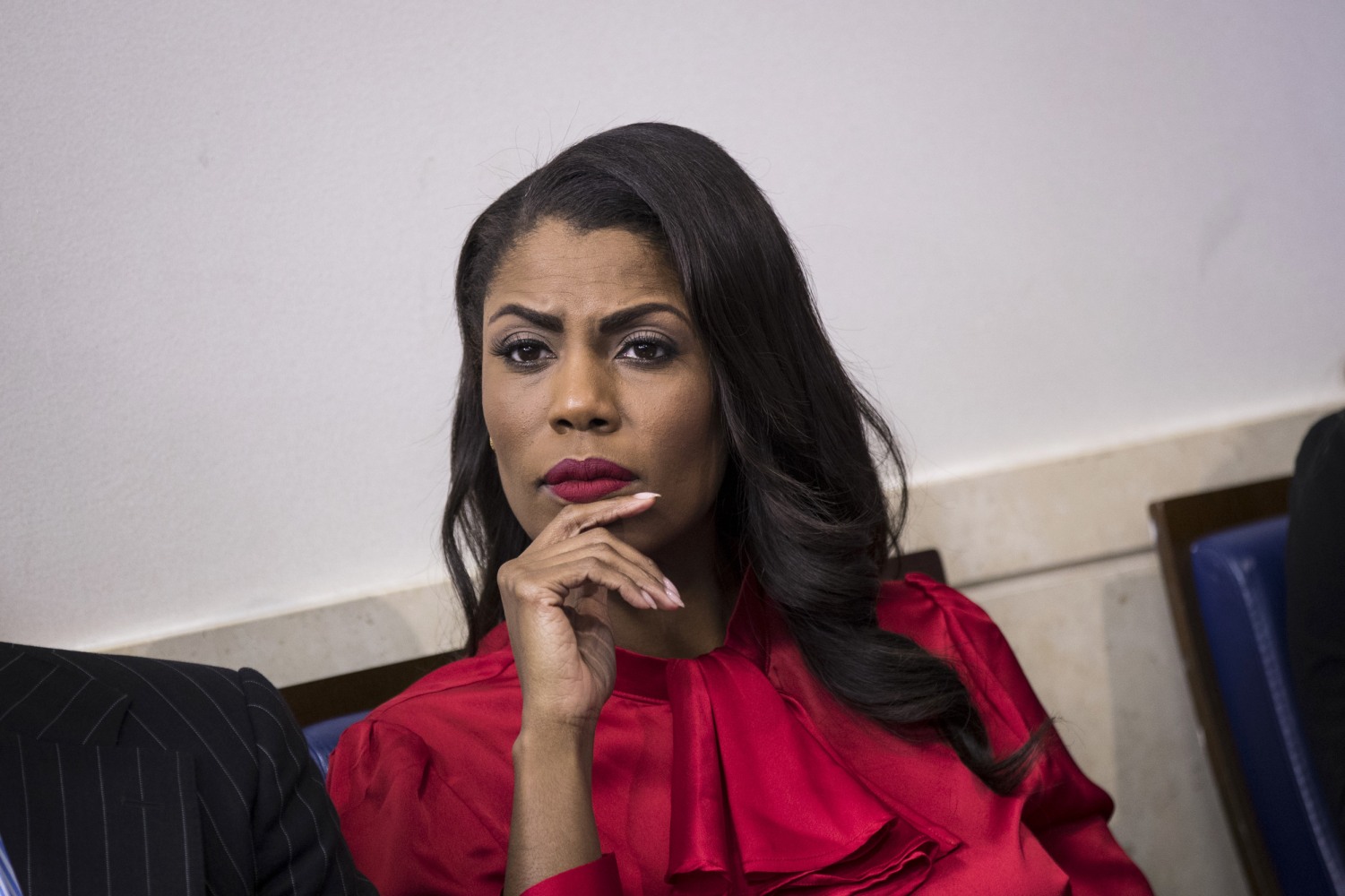
WASHINGTON — Omarosa Manigault Newman knew she stood out in this White House.
“I’m the only African-American woman who sits at the table,” the former “Apprentice” contestant and departing White House senior staffer said in an interview Thursday morning.
In the ABC interview, Newman referred to herself as “the only African-American woman in this White House,” adding that she had “quite a story to tell” in the future about her time in an administration that has struggled with racial issues and outreach to minority communities.
That she’s the only at African-American woman at a senior level in the White House is not a stretch of the truth.
Newman, along with Housing and Urban Development Secretary Ben Carson, were the only black voices among more than 30 Cabinet secretaries and senior staff members around President Donald Trump. Though the position is not Cabinet level, Surgeon General Jerome Adams, an African-American, has been serving since September.
In a second interview with ABC, Newman pointed to a “lack of diversity” in the administration, calling it “very, very challenging being the only African-American woman in the senior staff” and even admitting it “was very lonely” working with a predominantly white staff who “had never worked with minorities, didn’t know how to interact with them.”
Asked by NBC News on Thursday how many black senior staffers remained at the White House in the wake of Newman’s departure, Press Secretary Sarah Huckabee Sanders declined to cite a number or specify who would take over Newman’s outreach to African-American communities.
“We have a really diverse team across the board at the White House,” she said, stressing that there’s also an effort to “continue to grow the diversity here” in the administration.
As for outreach efforts to minorities, Sanders noted that there are voices, including Carson’s, who play a role, but that Trump has also relied on some outside the White House.
“The president met with Senator Tim Scott,” Sanders said, referring to the South Carolina Republican. “I know he wants to continue those conversations as well to look at the best ways to do that and to do outreach to that community.”
The president himself told reporters Thursday afternoon that he liked Omarosa, but ignored a question about how many African-Americans he had in his inner circle.
Meanwhile, Newman said Thursday that the question of who would fill the void she left is one best asked of Trump and his chief of staff, John Kelly, whom she clashed with during her time in the White House.
Despite statements that the White House is “really diverse,” a June release of staff salaries showed that Newman was the only African-American at the top rung of the salary scale.
An NBC News review found only a small percentage of nonwhite staffers were appointed as assistants to the president or special assistants to the president. The White House did not respond to a request for comment on these findings.
Last week, former White House strategist Steve Bannon, at a gathering of black conservative leaders, called out the administration that he was once part of for what he cited as a lack of diversity, saying the limited number of black staffers was “inexcusable.”
“You can’t defend it,” Bannon said, adding later, “I hope, and I think, that there’s action … taking place to solve that.”
“There are two sides to a story. I thought what took place was a horrible moment for the country, but there are two sides to a story,” the president said. Trump’s comments sparked swift criticism from lawmakers of both parties, and even members of his own administration.
Publicly, Newman was not one of them, and throughout her White House tenure she had a rocky relationship with black community leaders and activists.
Thursday morning she spoke cryptically about “a lot of things” she saw while in the service of the president —but in the second interview defended Trump, saying “he is not a racist” despite past missteps.
“Yes, I will acknowledge many of the exchanges, particularly in the last six months, have been racially charged,” Newman told ABC. “Do we then just stop and label him as a racist? No.”
“As the only African-American woman in this White House, as a senior staff, and assistant to the president, I have seen things that have made me uncomfortable, that have upset me, that have affected me deeply and emotionally, that has affected my community and my people,” she said.
“And when I can tell my story, it is a profound story that I know the world will want to hear.”