Putin’s ‘Invincible’ Missile Is Aimed at US Vulnerabilities

He also used the speech to reassure Russians that the military buildup was taking place even as the government was spending big sums to improve the quality of their lives.

But the main attention grabber in the speech was the weapons, which Mr. Putin described as a response to what he called the repudiation of arms control by the United States and its plans for a major weapons buildup.

The Trump administration has said that countering the world’s two other superpowers, Russia and China, was becoming its No. 1 national security mission, ahead of counterterrorism.

It has largely blamed Russia’s military modernization for that shift and has justified new work on nuclear weapons and bolstered missile defenses as the appropriate answer.

Mr. Putin may have further fueled the tension on Thursday by essentially declaring that Russia’s military brains had made America’s response obsolete.

He said a team of young, high-tech specialists had labored secretly and assiduously to develop and test the new weapons, including a nuclear-powered missile that could reach anywhere and evade interception.

“With the missile launched and a set of ground tests completed, we can now proceed with the construction of a fundamentally new type of weapon,” Mr. Putin said.

Advertisement

Continue reading the main story

He showed a video that illustrated the weapon flying over a mountain range, then slaloming around obstacles in the southern Atlantic before rounding Cape Horn at the tip of South America and heading north toward the West Coast of the United States.

Given that deception lies at the heart of current Russian military doctrine, questions arose about whether these weapons existed. American officials said that the nuclear cruise missile is not yet operational, despite Mr. Putin’s claims, and that it had crashed during testing in the Arctic.

The threats evoked the bombast of the Cold War. But this time they are not based on greater numbers of bombs but increased capabilities, stealth and guile.

Mr. Putin’s boasts about undersea nuclear torpedoes and earth-hugging cruise missiles emphasized the uselessness of American defenses against such weapons.

Oddly, apart from a reference to renewing the American nuclear arms enterprise in his State of the Union address, Mr. Trump has said almost nothing about the new era of competition with Mr. Putin or Russia. With multiple investigations into whether his campaign’s connections to Russians had influenced policy, he has neither protested the Russian buildup nor publicly endorsed, in any detail, his own administration’s plans to counter it.

The cruise missile was among five weapons introduced by Mr. Putin, each shown in video mock-ups on giant screens flanking him onstage. He threatened to use the weapons, as well as Russia’s older-generation nuclear arms, against the United States and Europe if Russia were attacked.

“We would consider any use of nuclear weapons against Russia or its allies to be a nuclear attack on our country,” he said.

Mr. Putin said he could not show the actual weapons publicly, but assured his audience of Russia’s main political and prominent cultural figures that they had all been developed.

Advertisement

Continue reading the main story

If Mr. Putin was not bluffing, said Aleksandr M. Golts, an independent Russian military analyst, then “these weapons are definitely new, absolutely new.”

Newsletter Sign Up

Continue reading the main story

“If we’re talking about nuclear-armed cruise missiles, that’s a technological breakthrough and a gigantic achievement,” he said in an interview. But, he added, “The question is, is this true?”

Several analysts writing on Facebook and elsewhere leaned toward the bluff theory. Given the recent history of Russian launch failures or premature crashes, the idea that Russia suddenly possessed a new generation of flying weapons strained credulity.

“The real surprise in among all of this is a nuclear-powered cruise missile,” said Douglas Barrie, a senior fellow for military aerospace at the International Institute for Strategic Studies in London. “It was talked about in the ’60s, but it ran into a lot of obstacles. To the extent that the Russians are seriously revisiting this is pretty interesting.”

Such technology could alter the balance of power, but Mr. Barrie questioned whether Russia was even close to deploying it.

“Does reality mean you have an item in the budget saying, ‘Develop nuclear propulsion for a missile?’” he said. “Or does it mean, ‘We’re going to have one ready to use soon’? I’d certainly want to see more evidence to believe that.”

Mr. Putin said Russia had developed the weaponry because the United States had rejected established arms control treaties and was deploying new missile defense systems in Europe and Asia.

President Barack Obama said that he was willing to negotiate cuts deeper than the 1,550 arms that Washington and Moscow are permitted to deploy under the 2010 New Start treaty, which took full effect last month. But it expires in a few years, and neither Mr. Putin nor Mr. Trump has shown interest in renewing it.

The United States has also accused Russia of violating the Intermediate Nuclear Forces treaty. After Mr. Putin’s speech, Heather Nauert, the State Department’s spokeswoman, said Mr. Putin essentially confirmed that by trumpeting the country’s development of new nuclear weapons.

Advertisement

Continue reading the main story

Mr. Putin was correct that the United States is investing in expanding missile defenses. But those were not meant to counter Russia’s huge arsenals, but rather the launching of a few missiles by a state like North Korea.

The new Russian weapons would render such defenses obsolete, Mr. Putin gloated, and if anyone found a workaround, “our boys will think of something new.”

Other weapons the Russian leader discussed included a ballistic missile called Sarmat that could round either pole and overcome any defense system; hypersonic nuclear weaponry that fly at 20 times the speed of sound; and unmanned deepwater submarines that could go huge distances at enormous speed.

Mr. Putin said that some of the weapons were so new that they had yet to be named, and announced a naming contest on the Ministry of Defense website.

Political analysts said it was an effective campaign ploy whether the weapons existed or not. “He’s giving people the image of a desired future, of a future for Russia, and that’s appealing for his domestic audience,” said Aleksei V. Makarkin, the deputy head of the Center for Political Technologies, a Moscow think tank.

Mr. Putin’s guns-and-butter, Russia-can-do-it-all speech came 17 days before the March 18 election. It seemed intended to reassure voters that expanded social spending would help solve the economic problems of the past four years, while sending the message that Mr. Putin was their best hope in protecting a Russia portrayed as a besieged fortress.

The reality that the country lacks the money to pay for a giant increase in social spending combined with a new generation of weapons was beside the point, Mr. Makarkin said.

“People may say Russia depends on oil, Russia doesn’t have the money, but the population at large doesn’t care about that,” he said. “They just want to know that we are a superpower.”

Advertisement

Continue reading the main story

On the social front, Mr. Putin promised to double government spending on health care and raise pensions. He said Russia would reduce the poverty rate — official statistics indicate that around 14 million Russians live below the poverty line — by 2024.

Mr. Putin also said that life expectancy, currently at 73, a leap from when he first took office in 2000, should exceed 80 by 2030.

Critics doubt that Russia will ever have the means to deliver so much, given its stumbling economy and relatively depressed oil prices. Max Trudolyubov, a newspaper columnist and political analyst, called the speech a modern version of the Czar Cannon, a giant 16th-century piece of armament that sits on the Kremlin grounds and that legend holds never really worked.

For years, Mr. Putin has chafed at the perceived disrespect showed to him and Russia by the United States. “Nobody listened to Russia,” he said near the end of the speech, to huge applause. “Well, listen up now.”

Correction: March 1, 2018

An earlier version of this article misstated the age of the Czar Cannon. It is from the 16th century, not the 15th century.


Continue reading the main story

Immigration head blames Oakland mayor for 800 missed arrests

A federal official said Wednesday that about 800 “criminals” avoided immigration arrests because Oakland Mayor Libby Schaaf alerted the public to the surprise operation, an extraordinarily high number of missed targets.

Thomas Homan, U.S. Immigration and Customs Enforcement’s acting director, told Fox News that the mayor’s warning on Twitter was “beyond the pale” and compared her to a gang lookout who tells people when a police car is arriving. Homan said the Justice Department is looking into whether Schaaf obstructed justice.

The mayor’s unusual public warning last weekend came hours before the agency launched an operation in Northern California that resulted in more than 150 arrests as of Tuesday, according to the agency.

The agency declined to elaborate on the 800 who allegedly got away or answer other questions about the operation that began Sunday. Danielle Bennett, an agency spokeswoman, said more information would be released later in the week.

John Torres, the agency’s director during the end of George W. Bush’s administration and beginning of Barack Obama’s, said agents generally capture about 40 percent of people they target in such sweeps.

Targets often elude authorities because agents don’t have search warrants and advocacy groups have waged public awareness campaigns urging people not to open their doors. Other times, agents have outdated addresses or targets are not home.

It was unclear how many people would have eluded capture without the mayor’s warning but Homan squarely blamed her for 800 and said her actions jeopardized officer safety.

“There’s over 800 significant public safety threat criminals, these are people who are here illegally and committed yet another crime, been convicted of a crime,” he told Fox. “She gave them warning, and there’s 800 that we were unable to locate because of that warning, so that community’s a lot less safe than it would have been.”

Homan’s statement of 800 missed targets — plus the 150 arrests — in only three days suggests an unusually large operation by the agency’s standards. Two weeks ago, it arrested 212 in a five-day operation in the Los Angeles area. A Texas operation in February resulted in 145 arrests over seven days.

The agency said about half of the people arrested in the San Francisco area have criminal convictions in addition to immigration violations, including convictions for assault, weapons offenses and driving under the influence. It is impossible to independently verify that claim because the agency refuses to name them. Its statement released Wednesday identified only one arrest by name.

Schaff on Saturday issued a statement on Twitter that she learned from “multiple credible sources” that an immigration operation was imminent in the San Francisco area, including Oakland, possibly within 24 hours.

The mayor, who is running for another term this year, defended her actions again on Wednesday, saying she was not tipped off by “official sources” and that she didn’t reveal specific locations.

Asked about Homan likening her to a gang lookout, she said the “Trump administration is trying to distract the American people, convince them that these immigrants are dangerous people. That could not be further from the truth and it is based in racism.”

Lara Bazelon, an associate law professor at the University of San Francisco, said it was highly unlikely that the mayor would be prosecuted.

“It’s a tall order for ICE to show that she was obstructing justice because they would have to show she knew they were going after specific people and I just don’t see the evidence for that,” she said.

The warring words are the latest sign of escalating tension between California officials and the Trump administration over immigration enforcement and “sanctuary” jurisdictions. Homan vowed that immigration agents would have a stronger presence in California since a state law took effect in January to sharply limit cooperation between state and local law enforcement and federal immigration authorities.

San Francisco Public Defender Jeff Adachi, who attended a protest outside the agency’s San Francisco office, said immigration officials did not respond to his demand that attorneys be allowed to interview people detained in the operation.

Booking logs at the Sacramento County jail show at least 12 people booked there by the agency on Sunday.

Dozens of protesters marching outside the agency’s offices in San Francisco after Homan spoke chanted, “Shut down ICE!” David Chiu, a Democratic state assemblyman, said Trump “has declared war on our immigrant communities.”

“We’re here to stand united and say we do not want him ripping apart our families, ripping apart our economy, ripping apart California,” he said.

Homan, in announcing the arrests late Tuesday, renewed his warning that California’s limits on cooperating with ICE in local jails will lead to a bigger presence of immigration agents on the streets.

“Sanctuary jurisdictions like San Francisco and Oakland shield dangerous criminal aliens from federal law enforcement at the expense of public safety,” he said.

——

Spagat reported from San Diego. Associated Press writers Paul Elias and Terry Chea in San Francisco contributed.

Rocket Launcher and Machine Guns Among 57000 Firearms Surrendered in Australian Amnesty

(CANBERRA) — More than 57,000 illegal firearms including a rocket launcher and machine guns were handed in during a recent Australian amnesty in which gun owners could surrender such weapons without penalty.

The government and some gun policy analysts were surprised by the large number of weapons that were surrendered in the first nationwide amnesty since 1996, when a lone gunman killed 35 people in Tasmania state and galvanized popular support for tough national gun controls.

A virtual ban on private ownership of semi-automatic rifles and a government-funded gun buyback cut the size of Australia’s civilian arsenal by almost a third.

The government said Thursday the three-month amnesty that ended in September collected 57, 324 firearms, including almost 2,500 semi-automatic and fully-automatic guns — the rapid-fire categories particularly targeted after the 1996 Port Arthur massacre.

“It was a very, very good result,” Law Enforcement Minister Angus Taylor told The Associated Press.

“This is another step in the process of making sure that we keep firearms out of the hands of criminals and gangs, and we keep Australians safe and secure,” he added.

Taylor declined to comment on whether the United States and other countries should follow Australia’s example after the recent Florida high school shooting that killed 17 people.

“I’m not going to give advice to other countries. This is working for us,” Taylor said, referring to national gun controls.

Before the amnesty, Sydney University gun policy analyst Philip Alpers predicted it would only collect “rubbish guns” that were not valued by legitimate gun owners or criminals.

“It’s a resounding success. I think it exceeded everybody’s expectations. I was astonished,” Alpers said on Thursday.

Key to the success over several state-based amnesties that have occurred since the 1996 massacre was that licensed gun dealers had agreed to act as collection points. In previous amnesties, the guns have had to be surrendered at police stations.

The amnesty report said a rocket launcher had been handed into a gun dealer rather than police. The dealer said he understood it had been found in a local garbage dump in Queensland state.

Alpers said the surrender now of semi-automatic and automatic weapons that had been hidden in 1996 when they were banned suggested Australia’s mindset on guns was shifting and that controls had gained popularity over two decades.

Most illegal guns in Australia are considered to be in the gray market, meaning they were not registered or surrendered as they should have been, but are not considered black market guns owned for the purpose of crime.

The danger of those markets merging became obvious in 2014 when a man who professed support for the Islamic State group took hostages in a Sydney cafe armed with a gray market shotgun.

The gunman and two hostages were killed in a shootout with police.

A government inquiry into the siege recommended the government deal with illegal guns in the community.

Trump Calls Sessions’s Handling of Surveillance Abuse Allegations ‘Disgraceful’

But the president’s options are constrained, advisers said, because he recognizes that he would have a difficult time winning Senate confirmation for a replacement. Mr. Sessions served there for 20 years, and his former colleagues have bristled at Mr. Trump’s attacks. Any dismissal of Mr. Sessions would be taken by Democrats and even some Republicans as an effort to seize control of the Russia investigation and could trigger a bipartisan backlash.

The exchange on Wednesday began when the president lashed out at Mr. Sessions for seeming to suggest that the Justice Department’s inspector general would look into Republican charges of misconduct in the opening stage of the Russia investigation rather than opening his own examination.

“Why is A.G. Jeff Sessions asking the Inspector General to investigate potentially massive FISA abuse,” Mr. Trump wrote on Twitter. “Will take forever, has no prosecutorial power and already late with reports on Comey etc. Isn’t the I.G. an Obama guy? Why not use Justice Department lawyers? DISGRACEFUL!”

Republicans have accused Justice Department and F.B.I. officials of abusing their powers while President Barack Obama was still in office by using information from a dossier prepared by a former British spy paid by Hillary Clinton’s 2016 presidential campaign to justify surveillance of a former Trump campaign adviser, Carter Page. Officials did not fully inform the court that issues warrants under the Foreign Intelligence Surveillance Act, or FISA, of the origin of the information, Republicans complained. Democrats have called that a distortion and distraction.

The inspector general, Michael E. Horowitz, was appointed by Mr. Obama in 2012, but previously worked for the Justice Department under Republican and Democratic presidents. He has already been investigating how James B. Comey, the F.B.I. director until Mr. Trump fired him last spring, handled the inquiry into Mrs. Clinton’s use of a private email server while she was secretary of state.

Mr. Sessions seemed to take umbrage at the president’s latest message. “We have initiated the appropriate process that will ensure complaints against this department will be fully and fairly acted upon if necessary,” he said in his statement.

“As long as I am the attorney general,” he added, “I will continue to discharge my duties with integrity and honor, and this department will continue to do its work in a fair and impartial manner according to the law and Constitution.”

Advertisement

Continue reading the main story

Mr. Sessions’s response, polite but pointed, was all the more striking because he had largely kept quiet after previous attacks by the president. Mr. Trump has never forgiven Mr. Sessions for recusing himself from the Russia investigation, a decision that helped lead to the appointment of Mr. Mueller. Mr. Trump has publicly called Mr. Sessions “weak” and said he would not have appointed him had he known Mr. Sessions would step aside.

His latest eruption was prompted by Mr. Sessions’s comment on Tuesday that if a FISA surveillance warrant was wrongfully obtained, the matter would be “investigated” by the department’s inspector general. His comment was interpreted as confirmation that the inspector general had opened a second official inquiry on top of the Comey review.

But Mr. Sessions only meant to reiterate what he said after a memo drafted by House Republicans was released alleging abuse of the FISA process. At the time, Mr. Sessions said he would “forward to appropriate D.O.J. components all information I receive from Congress regarding this.”

Newsletter Sign Up

Continue reading the main story

The nuance was lost on Mr. Trump, who among other things did not seem to understand that an attorney general cannot order an inspector general to investigate anything, only refer information.

“The president’s tweet reveals that he really doesn’t understand how the government works and how the Justice Department works,” said Michael Bromwich, a former department inspector general.

He added that the inspector general’s office has a reputation for professionalism. “It’s incredibly demoralizing to have the chief executive of the government not only not understand and appreciate what you do, but attack what you do on a constant basis,” Mr. Bromwich said.

Inspectors general at cabinet agencies are kept separate to preserve their independence. Paul Light, a New York University professor and specialist on the offices, recalled that President Ronald Reagan fired all of the inspectors general but was forced by Congress to rehire some of them. “They have protections in statutes against arbitrary dismissal,” he said.

After Mr. Trump’s tweet, Mr. Horowitz, the inspector general, received support from Republicans, including Senator Charles E. Grassley of Iowa, the chairman of the Senate Judiciary Committee that confirmed him.

“I have complete confidence in him and hope he is given the time, the resources and the independence to complete his work,” said Representative Trey Gowdy, Republican of South Carolina and the chairman of the House Oversight Committee.

Advertisement

Continue reading the main story

Several Republicans expressed dismay at the president’s continued campaign against Mr. Sessions. “It’s kind of mind-boggling that he would call out his own attorney general,” former Representative Jason Chaffetz of Utah said on Fox News.

Representative Peter T. King of New York, also on Fox, expressed sympathy with Mr. Trump’s desire for a second investigation run by Mr. Sessions, but added that the president should not berate him. “Jeff Sessions is loyal to the president and he’s one of the first to support him, and he’s often in very difficult positions and I think he’s trying to reconcile as best as he can,” he said.

Michael W. McConnell, a former appellate judge now at Stanford Law School, said a president has every right to direct his attorney general.

“What raises eyebrows is the form and tone of the tweet, which appears to be a commentary on the attorney general’s decisions rather than an exercise of presidential supervisory authority,” he said. “Mr. Trump is the president. If he wants something done differently, he should order that it be done differently, with serious reflection, through proper channels and in the proper form.”

Jamil Jaffer, a law professor at George Mason University and former associate White House counsel under President George W. Bush, said social media was not the best way to direct action by an attorney general. “The president has a lot of tools that are a lot more effective than putting the A.G. on blast on Twitter,” he said.

But Mr. Trump got support from other quarters. Representative Lee Zeldin of New York and a dozen other Republicans sent a letter to Mr. Sessions on Wednesday urging him to appoint a special counsel to investigate the handling of Mrs. Clinton’s case and the FISA warrant targeting Mr. Page.

The Rev. Jerry Falwell Jr., the president of Liberty University, suggested that Mr. Sessions had never really supported Mr. Trump in the first place.

“@USAGSessions must be part of the Bush/Romney/McCain Republican Establishment,” he wrote on Twitter. “He probably supported @realDonaldTrump early in campaign to hide who he really is. Or he could just be a coward.”

Eileen Sullivan, Michael Schmidt and Nicholas Fandos contributed reporting.

Follow Peter Baker and Katie Benner on Twitter: @peterbakernyt @ktbenner.

A version of this article appears in print on March 1, 2018, on Page A1 of the New York edition with the headline: Trump Tears Into Sessions Over Russia Investigation.


Continue reading the main story

House Oversight Panel Asks HUD For Documents Amid Accusations Of Lavish Spending

Housing and Urban Development Secretary Ben Carson speaks at Vaux Big Picture High School in Philadelphia. A former HUD employee says she was demoted after refusing to comply with a request from the acting agency head that she “find money” to bankroll a costly remodeling of future HUD Secretary Ben Carson’s office.

Matt Rourke/AP


hide caption

toggle caption

Matt Rourke/AP

Housing and Urban Development Secretary Ben Carson speaks at Vaux Big Picture High School in Philadelphia. A former HUD employee says she was demoted after refusing to comply with a request from the acting agency head that she “find money” to bankroll a costly remodeling of future HUD Secretary Ben Carson’s office.

Matt Rourke/AP

Updated at 10 p.m. ET

The chairman of the House Oversight Committee and Government Reform Committee sent a letter to Housing and Urban Development Secretary Ben Carson Wednesday requesting “all documents and communications” related to the redecorating of his office and HUD’s handling of a whistleblower.

In a four-and-a-half page letter, Rep. Trey Gowdy, R-S.C., said he wants the documents in order for the committee to “determine whether HUD adhered to the applicable spending limitations” that apply to office makeovers. Gowdy is also requesting documentation involving the HUD employee who claims she was the subject of retaliation after refusing to exceed spending caps set for office redecorating.

He set a deadline of March 14 for the documents to be handed over to the committee.

Gowdy’s letter to Carson comes a day after reports surfaced the agency approved more than $31,000 on a new office suite dining room set. Additionally there are allegations brought by a former HUD official claiming she was told by her superiors that “$5,000 will not even buy a decent chair.”

According to the New York Times, a “custom hardwood table, chairs and hutch” were purchased a month after a whistleblower complaint was filed alleging Candy Carson, the wife and informal adviser to the HUD Secretary, was pushing for elaborate modifications to the drab decor of the department’s offices.

The whistleblower Helen Foster, was a career HUD employee. She filed a complaint in November alleging she was demoted and replaced after refusing to exceed the legal $5,000 limit on redecoration. The existence of the complaint was first reported Tuesday by The Guardian.

Carson tweeted on Wednesday evening that he had done nothing wrong.

In a statement, HUD spokesperson Raffi Williams denied Foster’s allegations of lavish spending, adding that while Carson did have different chairs in his office they were not new purchases, but rather ones that came from HUD’s basement.

“Secretary Carson, to the best of our knowledge, is the only secretary to go to the subbasement at his agency to select the furniture for his office. All the furniture in his office was purchased by the government prior to his arrival,” Williams said.

According to the Guardian, Foster was first urged by then-acting HUD Director Craig Clemmensen in January last year to help Carson’s wife get the funding to redecorate Carson’s office.

In an interview with CNN Tuesday, Foster said she was pressured and retaliated against for not following through on finding more money. She was also told that past administrations always found the funding.

“I had a bucket in my car because I would throw up on the way to work and on the way home from work every day, just out of anxiety,” Foster said.

In an interview with NPR, Foster’s Washington-based lawyer, Joe Kaplan, of the firm Passman Kaplan, said the pressure by HUD officials persisted “for several weeks, certainly into February” of last year.

According to Kaplan, when Foster told Clemmensen that she could not get around the statutory cap of $5,000 for redecorating, Clemmensen told her that amount could not even purchase a decent chair.

“I’ve sat in a lot of chairs that have cost less than $5,000, let me tell you,” Kaplan said.

Kaplan said his client is seeking compensatory damages and reinstatment as HUD’s chief administrative officer. He adds that “a public apology by HUD would go a long way in restoring Helen’s reputation.”

HUD officials provided receipts that showed HUD spent $3,373 on window treatments, including wooden blinds, and an additional $1,100 on furniture repairs.

In a separate receipt, dated Dec. 21, an item labeled “Secretary’s Furniture Procurement” for the amount of $31,561 was made to the Baltimore-based contractor Sebree and Associates LLC.

Officials at HUD said the secretary did not purchase the dining room set. They said it was bought by “career staffers in charge of the building.” The old table and chairs from the mid-1960s were “deemed unrepairable.” NPR has not confirmed who gave the OK for that purchase and has sought clarity from HUD about why the purchase of the new table did not fall under the $5,000 new-decor cap.

The complaint over HUD’s decoration spending comes as the agency has been embroiled in other controversies in recent weeks. The Trump administration is proposing more than $8 billion in cuts to HUD’s budget, or more than 14 percent from current levels.

Carson is also facing allegations that he may have violated ethics rules by allowing his son, Baltimore businessman Ben Carson Jr., to organize “listening tours” for his father in that city last summer. The secretary has called on HUD’s inspector general to review whether there were any violations.

Kaplan, the lawyer for Foster, said the Office of Special Counsel could determine whether it will move forward and investigate Foster’s complaint as early as next week. The special counsel is separate from the Justice Department counsel investigating contacts between Russian officials and the Trump presidential campaign.

Trump Stuns Lawmakers With Seeming Embrace of Gun Control

Democrats, too, said they were skeptical that Mr. Trump would follow through.

“The White House can now launch a lobbying campaign to get universal background checks passed, as the president promised in this meeting, or they can sit and do nothing,” said Senator Chris Murphy, Democrat of Connecticut.

At the core of Mr. Trump’s suggestion was the revival of a bipartisan bill drafted in 2013 by Senators Joe Manchin III, Democrat of West Virginia, and Patrick J. Toomey, Republican of Pennsylvania, after the shooting at Sandy Hook Elementary School. Despite a concerted push by President Barack Obama and the personal appeals of Sandy Hook parents, the bill fell to a largely Republican filibuster.

Video

Most Americans Want More Gun Control. Why Doesn’t It Happen?

Polls show solid support for stricter laws, especially after mass shootings. But there is also deep disagreement, staunch opposition and growing disenchantment with gun control.


By ROBIN STEIN, DREW JORDAN and NATALIE RENEAU on Publish Date February 27, 2018.


Photo by Tom Brenner/The New York Times.

Watch in Times Video »

Mr. Trump’s embrace did not immediately yield converts. Senator Marco Rubio, Republican of Florida, said after the meeting that he was unmoved, repeating the Republican dogma that recent shootings were not “conducted by someone who bought a gun at a gun show or parking lot.” Senator John Cornyn of Texas, the No. 2 Republican, who sat next to the president looking flustered, emerged from the meeting and declared, “I thought it was fascinating television and it was surreal to actually be there.”

But Mr. Trump suggested that the dynamics in Washington had changed after the school shooting in Florida that claimed 17 lives, in part because of his own leadership in the White House, a sentiment that the Democrats in the room readily appeared to embrace as they saw the president supporting their ideas.

“It would be so beautiful to have one bill that everyone could support,” Mr. Trump said as Senator Dianne Feinstein, Democrat of California and a longtime advocate of gun control, sat smiling to his left. “It’s time that a president stepped up.”

Democrats tried to turn sometimes muddled presidential musings into firm policy: “You saw the president clearly saying not once, not twice, not three times, but like 10 times, that he wanted to see a strong universal background check bill,” said Senator Amy Klobuchar, Democrat of Minnesota. “He didn’t mince words about it. So I do not understand how then he could back away from that.”

Just what the performance means, and whether Mr. Trump will aggressively push for new gun restrictions, remain uncertain given his history of taking erratic positions on policy issues, especially ones that have long polarized Washington and the country.

Advertisement

Continue reading the main story

The gun control performance on Wednesday was reminiscent of a similar televised discussion with lawmakers about immigration in January during which the president appeared to back bipartisan legislation to help young immigrants brought to the country illegally as children — only to reverse himself and push a hard-line approach that helped scuttle consensus in the Senate.

Mr. Trump’s comments during the hourlong meeting were at odds with his history as a candidate and president who has repeatedly declared his love for the Second Amendment and the N.R.A., which gave his campaign $30 million. At the group’s annual conference last year, Mr. Trump declared, “To the N.R.A., I can proudly say I will never, ever let you down.”

Graphic

With AR-15s, Mass Shooters Attack With the Rifle Firepower Typically Used by Infantry Troops

When a gunman walked into a Florida school on Feb. 14, his rifle let him fire in much the same way that many American soldiers and Marines would fire M16 and M4 rifles in combat.


But at the meeting, the president repeatedly rejected the N.R.A.’s top legislative priority, a bill known as concealed-carry reciprocity, which would allow a person with permission to carry a concealed weapon in one state to automatically do so in every state. To the dismay of Republicans, he dismissed the measure as having no chance at passage in the Congress. Republican leaders in the House had paired that N.R.A. priority with a modest measure to improve data reporting to the existing instant background check system.

“You’ll never get it,” Mr. Trump told Representative Steve Scalise of Louisiana, the House Republican whip who was gravely injured in a mass shooting last year but still opposes gun restrictions. “You’ll never get it passed. We want to get something done.”

Mr. Trump also flatly insisted that legislation should raise the minimum age for buying rifles to 21 from 18 — an idea the N.R.A. and many Republicans fiercely oppose. When Mr. Toomey pushed back on an increase in the minimum age for rifles, the president accused him of fearing the N.R.A. — a remarkable slap since the association withdrew its support for Mr. Toomey over his background check bill.

“If there’s a Republican who’s demonstrated he’s not afraid of the N.R.A., that would be me,” Mr. Toomey said after the meeting.

The president appeared eager to challenge the impression that he is bought and paid for by the gun rights group. While calling the membership of the N.R.A. “well meaning,” he also said he told its leaders at a lunch on Sunday that “it’s time. We’re going to stop this nonsense. It’s time.”

Officials at the gun group were taken aback by the president’s comments and immediately ramped up their lobbying against measures that they have long said would damage the Second Amendment and do little to protect people against gun violence.

Advertisement

Continue reading the main story

“While today’s meeting made for great TV, the gun control policies discussed would make bad policy that wouldn’t keep our children safer,” said Jennifer Baker, a spokeswoman for the N.R.A.’s lobbying arm. “We are going to continue to work to pass policies that might actually prevent another horrific tragedy.”

But at least for Wednesday, Mr. Trump seemed willing to venture far from the N.R.A. script, even appearing to suggest that he might back an ban on assault-style weapons when Ms. Feinstein asked what they could do about “weapons of war.” The N.R.A. has helped defeat an assault weapons ban since the last one expired in 2004.

The reaction in Washington was swift. Breitbart.com, a right-wing site once led by Stephen K. Bannon, the president’s onetime chief strategist, published an article with a headline in bright red that said, “TRUMP THE GUN GRABBER.”

The site added that the president “Cedes Dems’ Wish List — Bump Stocks, Buying Age, ‘Assault Weapons,’ Background Checks. Tells Scalise to Take a Hike — After Surviving Assassination Attempt.”

The president did return several times to a proposal that conservatives like: arming teachers in schools and ending the so-called gun-free zones around schools that Mr. Trump said had made those institutions among the most vulnerable targets for mass shooters.

“You’ve got to have defense, too,” the president told the lawmakers. “You can’t just be sitting ducks. And that’s exactly what we’ve allowed people in these buildings and schools to be.”

But several times, he acknowledged how controversial that proposal was, and seemed to accept the idea that it might not be included in a comprehensive gun control measure that could pass both chambers of Congress.

He also backed a modest measure sponsored by a Republican and a Democrat in the Senate to improve the quality of the data in the background check system. But he told the bill’s author, Mr. Cornyn, to consider just adding that proposal to the broader expansion of the background check system.

“It would be nice to add everything on to it,” Mr. Trump said. “Maybe change the title. Maybe we could make it much more comprehensive and have one bill.”

Correction: February 28, 2018

An earlier version of this article misstated the timing of a similar televised meeting. It was in January, not last year.


Continue reading the main story

Supreme Court sounds wary of Microsoft’s shield for emails stored abroad

“There is nothing under your position that prevents Microsoft from storing United States communications, every one of them, either in Canada or Mexico or anywhere else, and then telling their customers, ‘Don’t worry. If the government wants to get access to your communications, they won’t be able to,'” Roberts said.

US intel: Russia compromised seven states prior to 2016 election

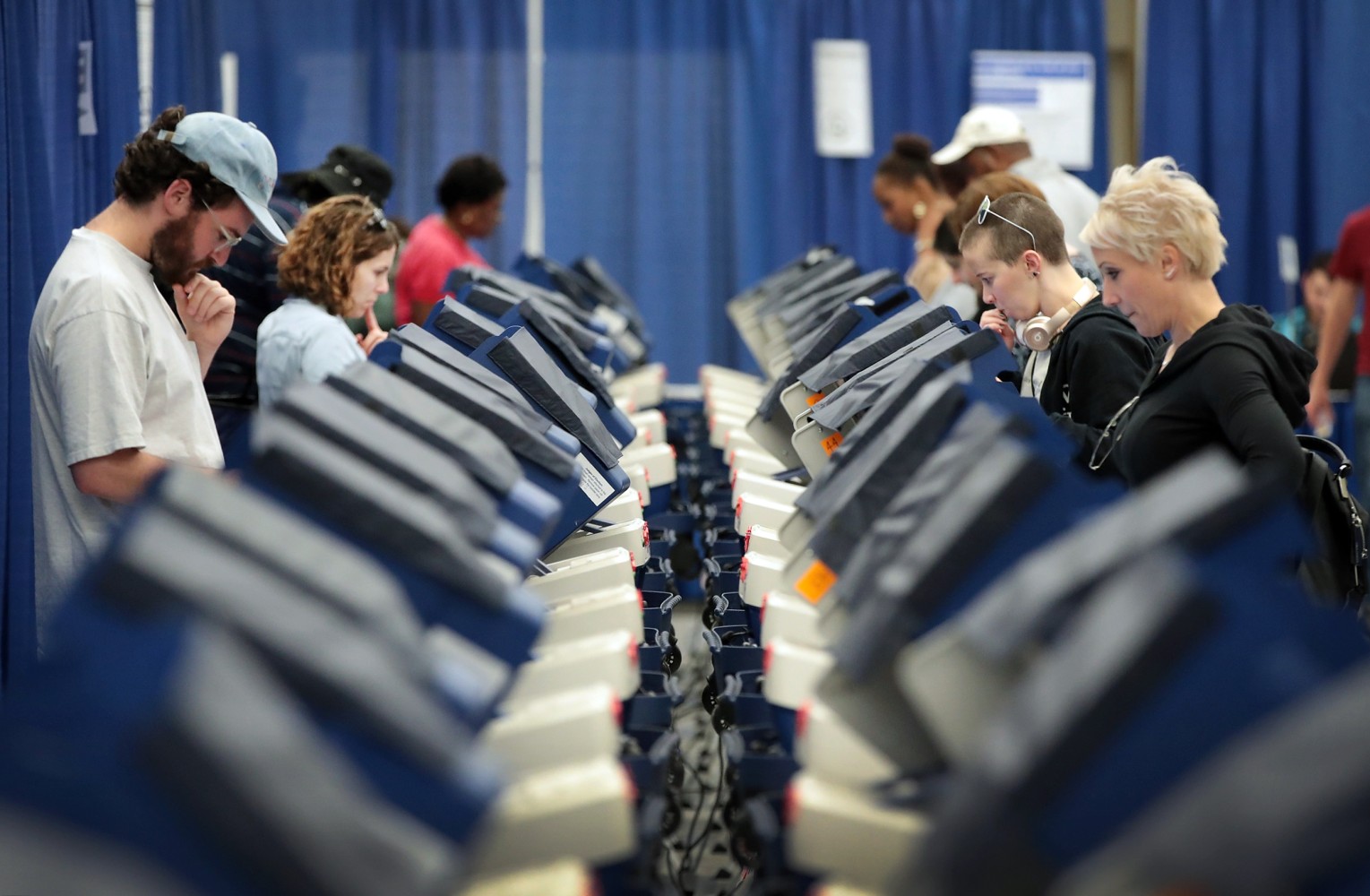
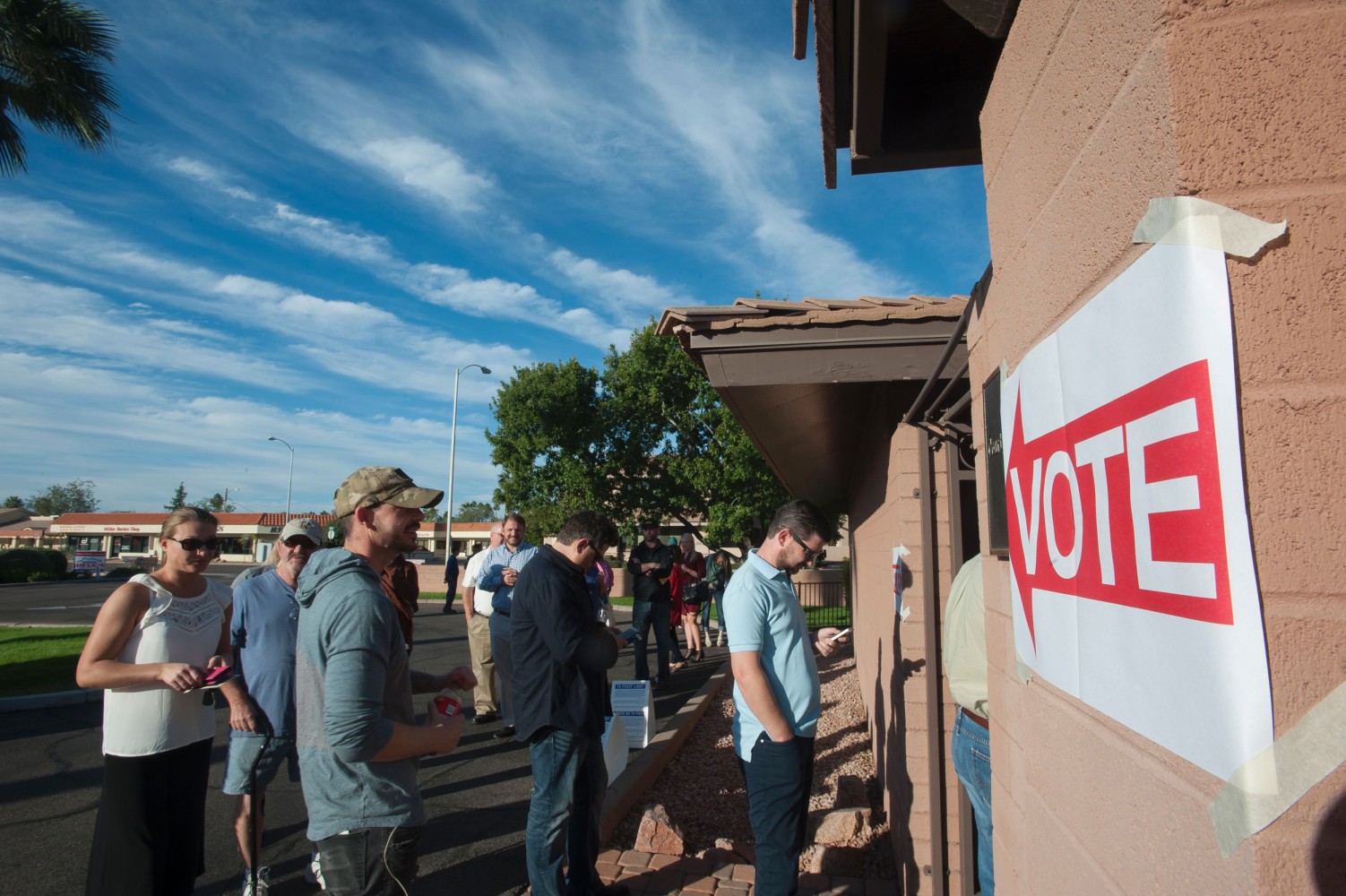
The U.S. intelligence community developed substantial evidence that state websites or voter registration systems in seven states were compromised by Russian-backed covert operatives prior to the 2016 election — but never told the states involved, according to multiple U.S. officials.

Top-secret intelligence requested by President Barack Obama in his last weeks in office identified seven states where analysts — synthesizing months of work — had reason to believe Russian operatives had compromised state websites or databases.

Three senior intelligence officials told NBC News that the intelligence community believed the states as of January 2017 were Alaska, Arizona, California, Florida, Illinois, Texas and Wisconsin.


The officials say systems in the seven states were compromised in a variety of ways, with some breaches more serious than others, from entry into state websites to penetration of actual voter registration databases.

While officials in Washington informed several of those states in the run-up to the election that foreign entities were probing their systems, none were told the Russian government was behind it, state officials told NBC News.

All state and federal officials who spoke to NBC News agree that no votes were changed and no voters were taken off the rolls.

According to classified intelligence documents, the intelligence community defines compromised as actual “entry” into election websites, voter registration systems and voter look-up systems.

NBC News reached out to all seven states that were compromised, as well as 14 additional states the Department of Homeland Security says were probed during the 2016 election.

To this day, six of the seven states deny they were breached, based on their own cyber investigations. It’s a discrepancy that underscores how unprepared some experts think America is for the next wave of Russian interference that intelligence officials say is coming.

Eight months after the assessment, in September 2017, the Trump administration’s Department of Homeland Security (DHS) finally contacted election officials in all 50 states to tell them whether or not their systems had been targeted. It told 21 states they had been targeted, and U.S. officials acknowledged that some of those attempts had been successful.

“I think the Obama administration should have been doing much more to push back against the Russians across the board,” said Juan Zarate, an NBC News analyst who was deputy national security adviser for combating terrorism under President George W. Bush. “I think the U.S. was very meek and mild in how we responded to Russian aggression.”


Denis McDonough, who was Obama’s last chief of staff, strongly disagrees, arguing the administration acted to thwart the Russians before and after the election. Obama administration spokespeople also say they transmitted sensitive intelligence regarding state compromises to congressional leaders.

“The administration took a series of steps to push back against the Russians to include far-ranging sanctions, diplomatic steps to push people associated with the Russian effort out of this country and also warning our friends and allies,” he said.

The Trump DHS, like under the Obama administration, has declined to share the intelligence assessment of which states were actually compromised, according to state election officials.

This month, in an exclusive interview with NBC News, Jeanette Manfra, the current head of cybersecurity at the Department of Homeland Security, said that “an exceptionally small number” of those 21 states “were actually successfully penetrated.” But Manfra declined to answer questions about the classified intelligence assessment, or to say specifically how many states had been penetrated.

Top election officials from all 50 states met in Washington this month for a National Association of Secretaries of State conference and received temporary security clearances for a classified threat briefing from intelligence officials. According to two officials present, one from the intelligence community and the other a state official, the actual intelligence on state compromises was not shared.

While numerous state election officials told NBC News that the Department of Homeland Security has been stepping up communications with them, many say they’re worried they are still not getting enough information from Washington.


Illinois itself had detected a “malicious cyberattack” on its voter registration system in the summer of 2016 and reported it to DHS, saying its voter rolls had been accessed but nothing had been altered. It is the only state to acknowledge actual compromise.

The other six states from the January 2017 assessment, however, say that when DHS told them last September that their systems had been targeted, it still did not tell them that their systems had been compromised. All six also say that based on their own cyber investigations, they believe their election systems were never compromised.

Three states said publicly in September that while some state websites were affected, none were directly related to voting; specifically, Texas, Wisconsin and California say some sites were “scanned.” But a former senior intelligence official told NBC News that these types of probes can also be serious, either as gateways to other networks or as reconnoitering for future attacks.

Fears of a repeat in 2018

Nearly 16 months after the presidential election, and more than eight months before the critical midterms, many state and federal officials are convinced the Russians will be back. They’re concerned that 2016 was laying the groundwork for a possible future attack.

“We have an extreme sense of urgency on insuring security of the 2018 elections, because you don’t get a chance to do it over,” said Alex Padilla, California’s secretary of state, who said there was no evidence of a successful hack in California.

Several state election officials, including Padilla, told NBC News they think they should have been told that U.S. intelligence agencies believed they’d been breached whether or not that turned out to be true.

“It is hugely imperative that intelligence be shared with state elections officials immediately in order to protect our election infrastructure and the integrity of election results,” Padilla said.


Reluctance to share the information may be due, in part, to the classification of the intelligence itself. Multiple intelligence officials told NBC News that determining the Russian government was behind the hacks depended on “exceptionally sensitive sources and methods” including human spies and eavesdropping on Russian communications.

No state election official at the time had a security clearance sufficient to permit access to such sensitive information, according to DHS.

“Look, whether or not state elections officials had the proper clearance has unfortunately been an excuse in my opinion, a bureaucratic response for why information or intelligence hasn’t been more quickly shared with state elections officials,” Padilla said.

“We’ve got to fix that right away, because it does us no good, [when somebody is] sitting in Washington, D.C., with a bit of information about a significant cyberthreat and elections officials and locals are completely unaware. That doesn’t help anybody and that needs to be addressed,” Padilla said.

Zarate said that he thought “too much of this has happened behind the veil of the government,” and that “much more has to be discussed openly with the public about what we know of the kinds of attacks that are happening, who may be behind them, and how we defend ourselves against [them].”

A spokesperson for Florida’s secretary of state, Mark Ard, said the state was informed by DHS in September 2017 that Florida had been targeted by hackers in 2016. “This attempt was not in any way successful and Florida’s online elections databases and voting systems remained secure,” Ard said.

Texas Secretary of State Rolando Pablos said in a statement that his agency had not seen any evidence that any voting or voting registration systems in Texas were compromised before the 2016 elections.

The public information officer for the Wisconsin Elections Commission said the commission has never detected a successful hack on its system, “nor has it ever been notified of one by the Department of Homeland Security or any other state or federal agency.”


A spokesperson for the Arizona secretary of state, Matt Roberts, said the state had still not been informed of a successful hack, and had seen no evidence of one. Roberts said the state had not been told that “ANY Arizona voting system has been compromised, nor do we have any reason to believe any votes were manipulated or changed. No evidence, no report, no nothing.”

Alaska did not respond to repeated requests for comment, but has previously denied that any breach occurred.

Bradley Moss, a lawyer specializing in national security, tried to lift the veil and find out what U.S. intelligence knew about the Russian attempts to compromise the voter system. He sued for disclosure of government files and won last week, receiving 118 top-secret pages from the intelligence community. The pages referred to “compromises” and other breaches but the pages were almost completely blacked out for security reasons.

Said Moss: “The spreadsheets show that there were documented breaches of election networks. That there were documented, numerous documented instances of attempted breaches of state election networks, and that there was a widespread concern among several agencies in the intelligence committee about the sanctity and the integrity of these election networks.”

In a statement, the Department of Homeland Security said it has been working with state and local officials for more than a year on the issue.

“This relationship is built on trust and transparency, and we have prioritized sharing threat and mitigation information with election officials in a timely manner to help them protect their systems,” DHS acting press secretary Tyler Houlton said.


“In addition to granting state officials clearances to give them access to classified information, we work to declassify information rapidly and have the ability to grant one-day waivers when necessary to provide state officials with information they may need to protect their systems.

“We are committed to this work and will continue to stand by our partners to protect our nation’s election infrastructure and ensure that all Americans can have the confidence that their vote counts — and is counted correctly.”

A statement from the Office of the Director of National Intelligence said only: “The declassified Intelligence Community Assessment of January 6, 2017, found that Russian actors did not compromise vote tallying systems. That assessment has not changed.”

Next steps

At a Senate hearing on Tuesday, the National Security Agency director, Adm. Mike Rogers, acknowledged that the White House has not directed him to try to stop Moscow from meddling in U.S. elections.

Sen. Claire McCaskill, D-Mo., said that was “outrageous” and asked whether the U.S. was in a position to stop Russia from “doing this again.”

“We’re taking steps but we’re probably not doing enough,” Rogers said.

“I want to know, why the hell not?” McCaskill shot back. “What’s it going to take?”

While the FBI and the Department of Homeland Security say they are taking steps to shore up cyberdefenses, FBI Director Christopher Wray told Congress this month that the instructions did not come from the top.

When Sen. Jack Reed, D-R.I., asked Wray if the president had directed him or the bureau to take “specific actions to confront and blunt” ongoing Russian activities, Wray said, “We’re taking a lot of specific efforts to blunt Russian efforts.”

Reed then asked, “Specifically directed by the president?” Wray answered, “Not as specifically directed by the president.”

The White House on Tuesday pushed back on any suggestion they’re not doing enough, saying President Trump is “looking at a number of different ways of making sure that Russia doesn’t meddle in our elections.”

For the future, Zarate suggests taking a lesson from the past.

“After 9/11, the walls between law enforcement and intelligence sources had to be broken down in order to connect the dots,” Zarate said. “There has to be a whole-of-government and whole-of-nation approach to dealing with what is an assault on American democracy.”